
Shark Unit Study Packet for Kids
A shark unit study packet is a printable school day about shark bodies, the ocean food chain and famous species, for kids in K to 8. This grade 3 sample has 14 pages plus a parent answer key: math, reading, writing, a maze, movement, science, coloring and a certificate. About 127 minutes of activities. Free to start.
By Natalie, homeschool mom and Packet Day co-founder
Updated October 2026Reviewed by Natalie
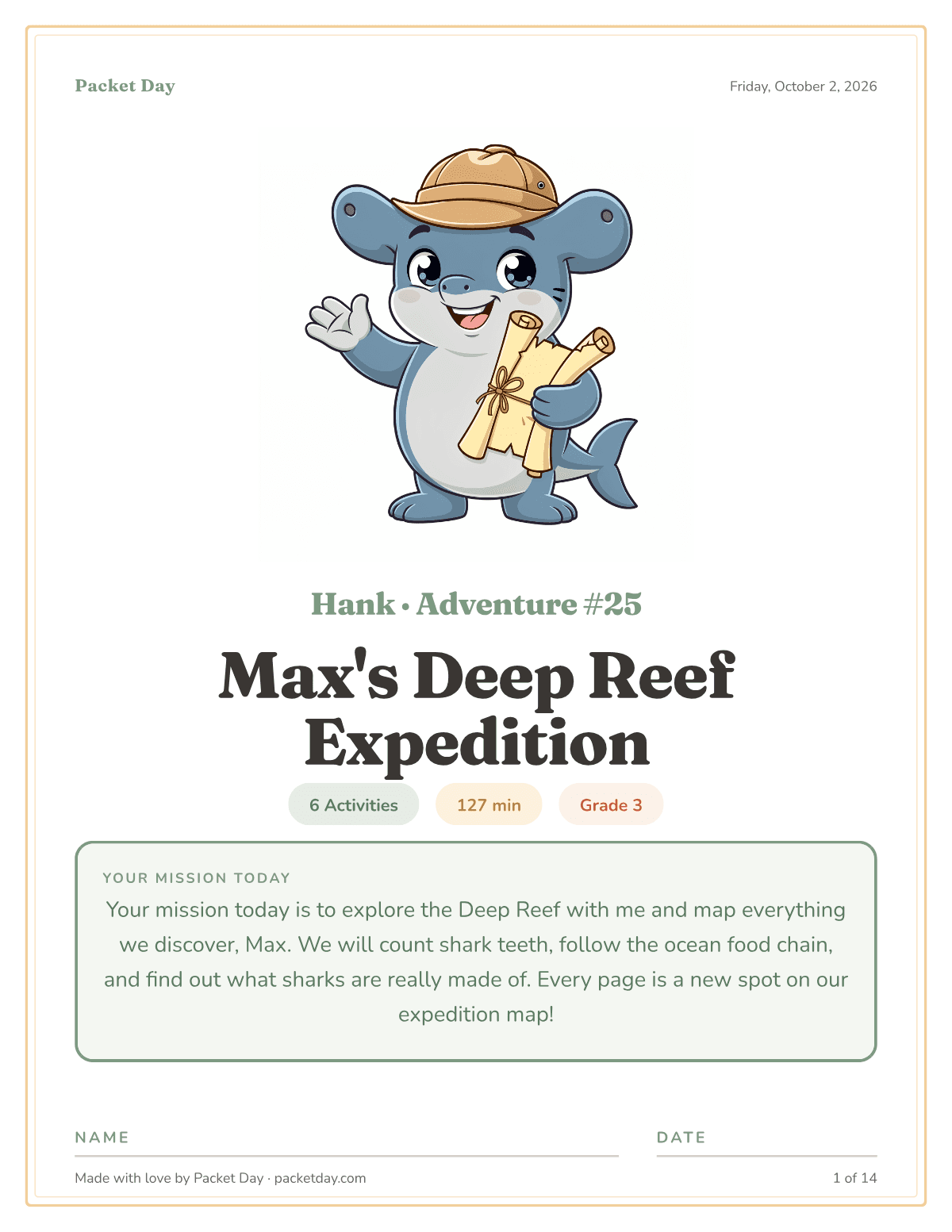
A sample packet made for a grade 3 learner named Max
What is inside a shark packet?
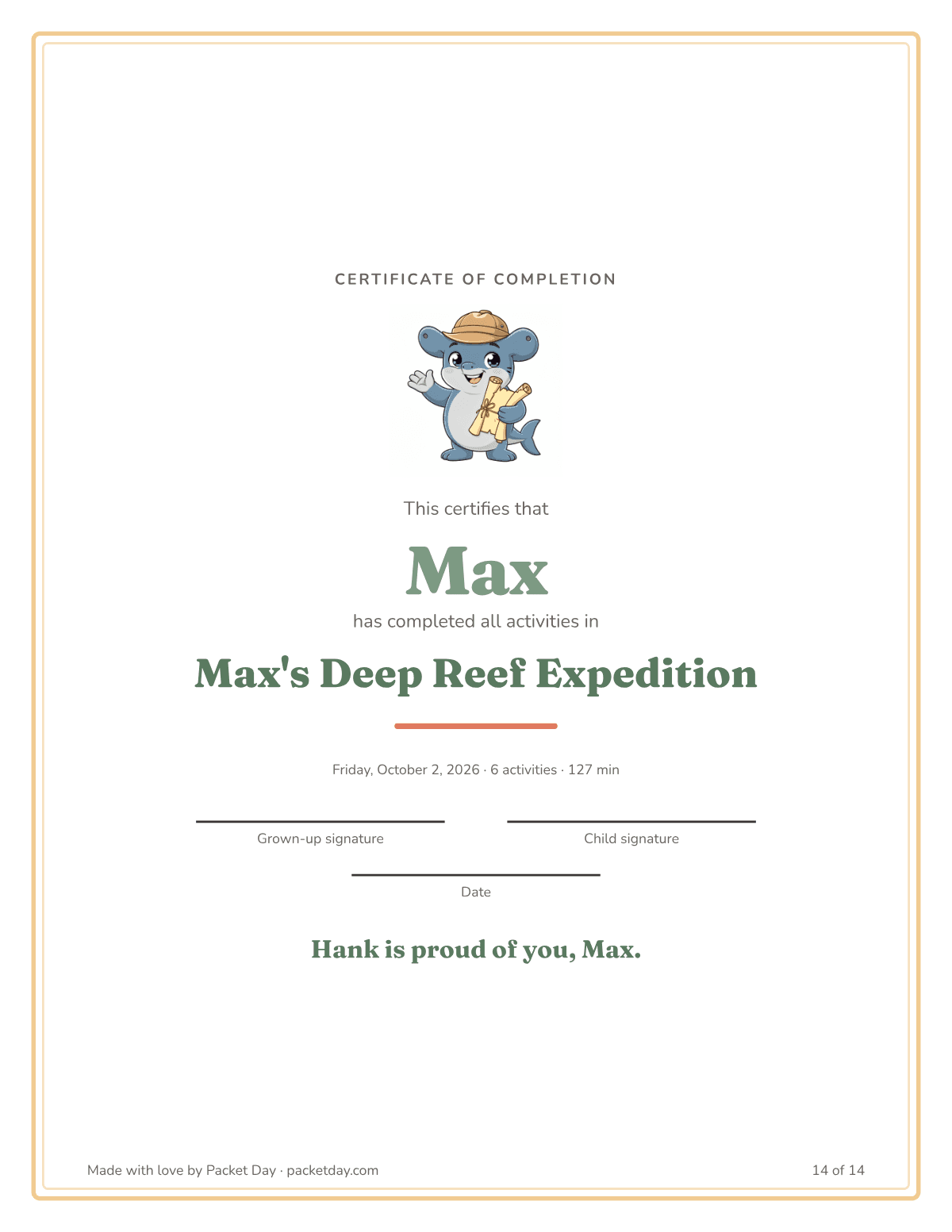
A shark packet is a full school day on paper: 11 to 17 pages built around sharks, roughly 2 to 5 hours with breaks. This sample has 14 pages plus a parent answer key, and Hank the hammerhead guides the whole day.
What does my child actually do?
Math
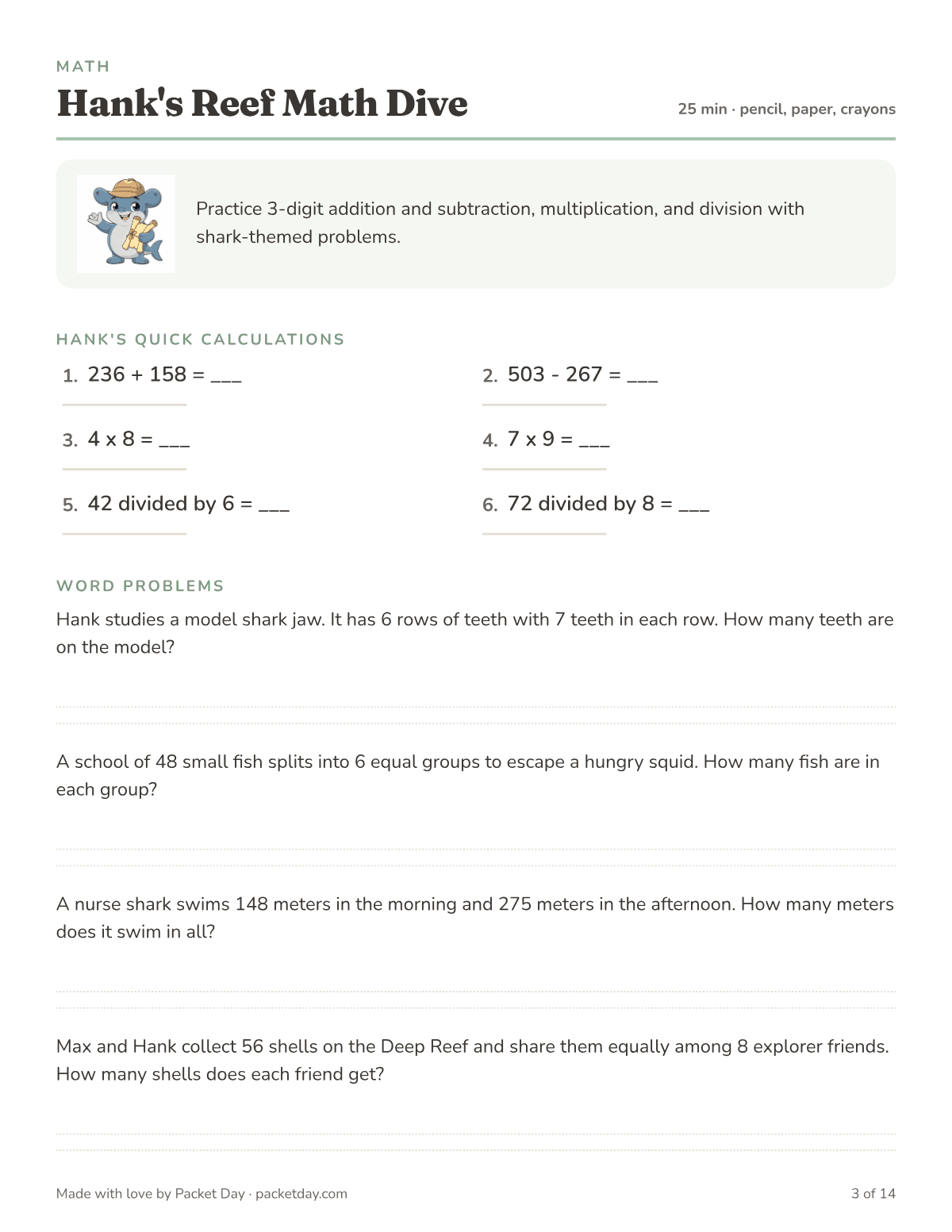
Hank's Reef Math Dive
Three digit adding and subtracting, times tables and division facts, shark tooth word problems, then drawing 4 sharks with 5 gill slits each.
Reading
Mapping the Deep Reef
A story about exploring with Hank, meeting a resting nurse shark and a whale shark, then six questions about cartilage, denticles and the food chain.
Writing
Max's Expedition Field Journal
A journal entry that starts Dear Journal: what you see when you dive in, one shark discovery, and where you and Hank explore next.
Puzzle break
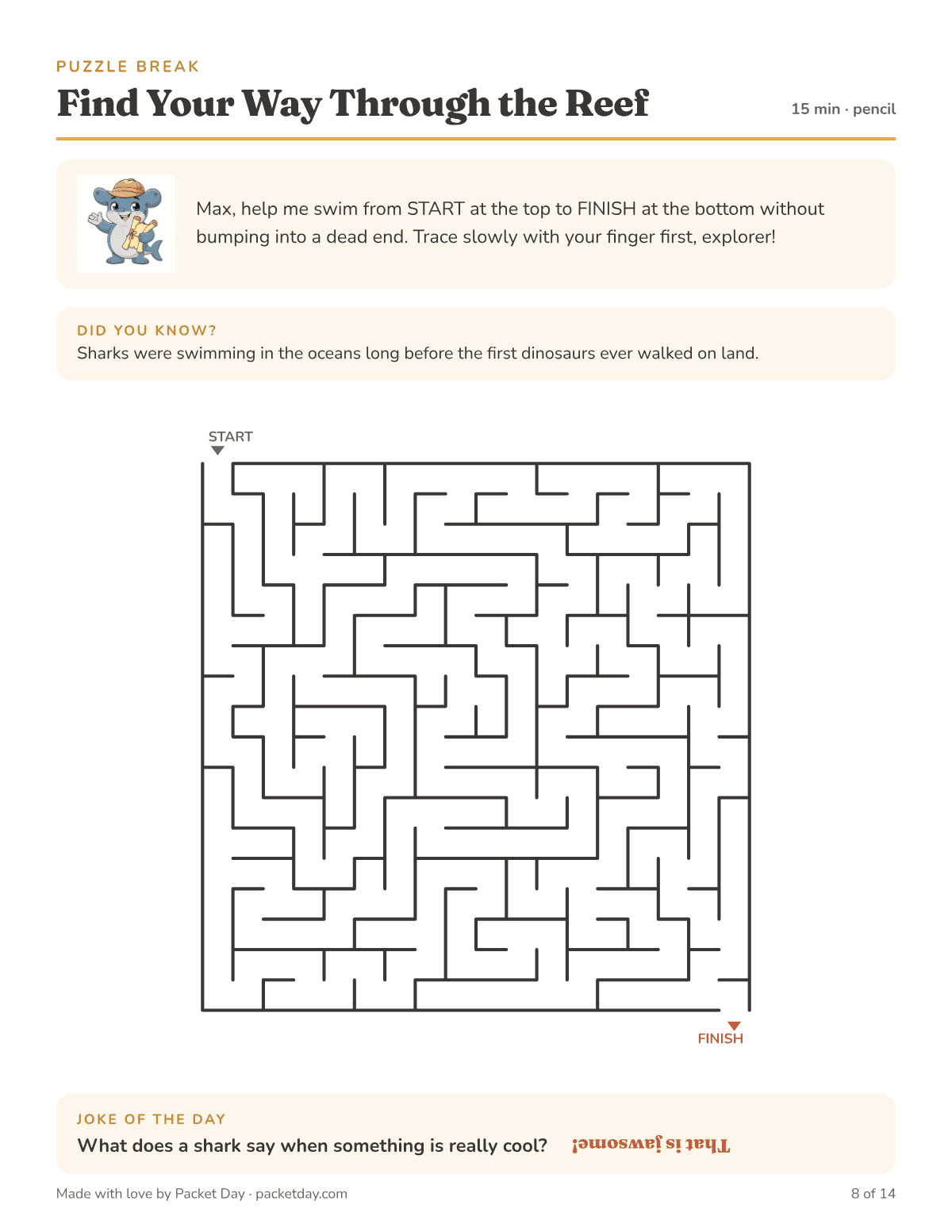
Find Your Way Through the Reef
A square maze from start to finish with one true path, plus a shark joke of the day.
Movement break
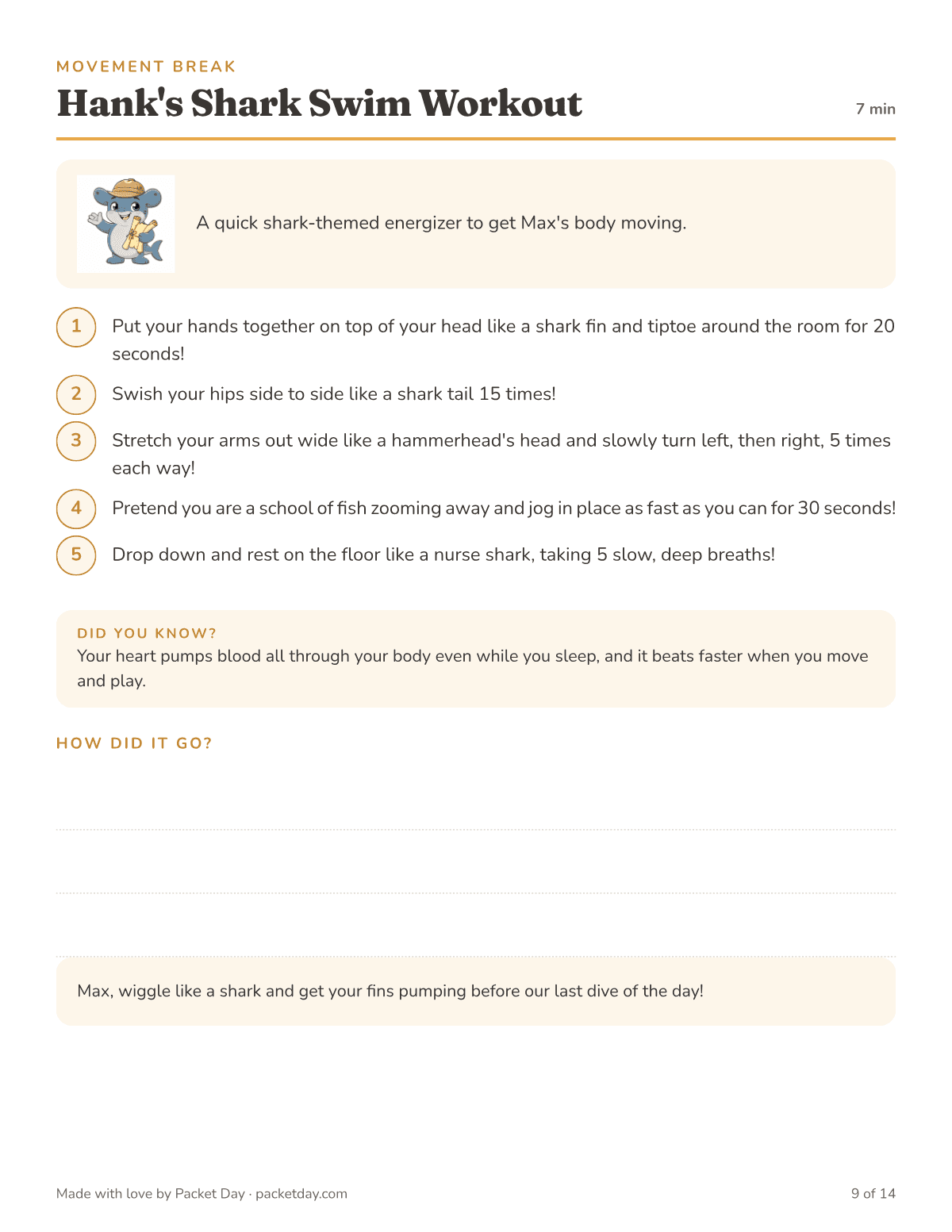
Hank's Shark Swim Workout
Fin walking, tail swishes, hammerhead turns, a fast school of fish jog and slow breathing on the floor like a nurse shark.
Science
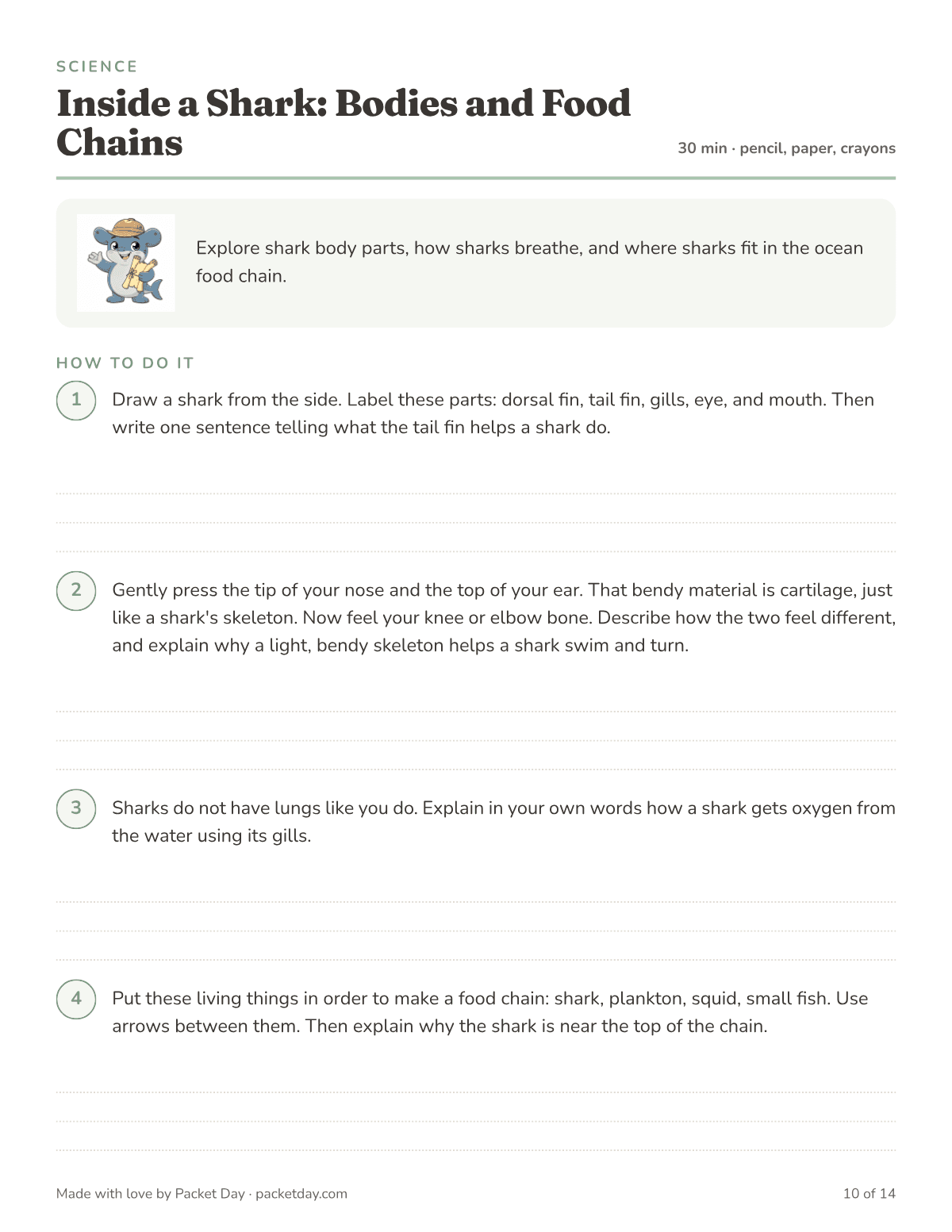
Inside a Shark: Bodies and Food Chains
Labeling fins and gills, feeling cartilage, explaining gills, building a food chain and comparing a whale shark with a great white.
Meet Hank
Hank is a hammerhead shark in an explorer's hat who never goes anywhere without his maps. His whole plan for the day is to chart the Deep Reef with Max and draw an arrow for every animal they find.
He narrates the reading story, lets Max feel his sandpaper skin, counts teeth in the math problems and asks for help through the maze. In the science section, Max studies Hank's body piece by piece, from his fins to his gills.
A hammerhead is a smart pick for a guide. The writing page even has a Did You Know about why his eyes sit so far apart.
What will my child learn?
Your child gets a full grade 3 day: adding and subtracting three digit numbers, multiplication and division facts, reading a story for evidence, writing a journal entry with a clear beginning and end, and explaining how a body works.
The science is all shark anatomy. A shark's skeleton is cartilage, the same bendy material in the tip of your nose, and it is lighter than bone. Its skin is covered in denticles, tiny tooth shaped scales. Gills take oxygen out of the water. Max feels the difference between cartilage and bone on his own nose and elbow.
Then comes the food chain: plankton feed small fish, small fish feed squid, squid feed sharks. Max writes it with arrows and explains why sharks sit near the top.
Which grades is this for?
Grades K-2
Younger kids get sharks too, with shorter reading, easier words, math at their grade and short writing. Every packet is made new for the grade you choose.
Grades 3-5
This sample is grade 3, so we can be specific. The story runs about 300 words. The math covers three digit adding and subtracting, multiplication facts like 7 x 9 and division facts. The journal asks for a full entry built around four prompts.
Grades 6-8
Middle schoolers get the same shark theme with longer reading, tougher vocabulary, grade level math and longer written answers. Each packet is written from scratch for your kid's exact grade.
A note from Natalie
On a trip to Hawaii, both kids were so excited to spot bright, colorful fish, a few small sharks and even a big sea turtle.
Shark kids tend to show up already knowing a lot. This packet meets them there. It skips the scary stuff and goes straight to how a shark is built, which turns out to be the part most kids find coolest anyway.
Questions parents ask about shark packets
Is a shark skeleton really not made of bone?
Right, a shark's skeleton is made of cartilage, the same bendy material in the tip of your nose and the top of your ear. It is lighter than bone, which helps a shark twist and turn. The science page has your kid press their nose and then their elbow to feel the difference for themselves.
How does a nurse shark breathe while it rests on the bottom?
A nurse shark can pump water over its gills while lying still on the sandy floor. Many other sharks have to keep swimming so water keeps flowing over their gills. The story makes that contrast, reading question three asks about it, and the movement break ends with your kid resting on the floor like a nurse shark.
What are denticles?
Denticles are tiny scales shaped like teeth that cover a shark's skin. They point back toward the tail, so the skin feels smooth one way and rough like sandpaper the other way. The science page asks your kid to predict how it would feel both ways and explain how that shape helps a shark glide.
Does this shark packet have anything scary in it?
No. There are no attacks and no scary pictures. The closest it gets is a hungry squid chasing small fish, and that becomes a food chain lesson. Great white sharks show up as top predators in the ocean food chain, which is a fact, not a fright. It is a good fit for a cautious kid.
How long have sharks been around?
A very long time. Sharks were swimming in the oceans long before the first dinosaurs walked on land, and the maze page says exactly that. If your kid wants more, it pairs well with our dinosaur packet. Ask them which they think came first before they turn to that page and read the answer.
Are these made by AI, and are they any good?
Yes, AI writes each one from scratch, around your kid's grade and the theme you type in. We are a homeschool family, we test packets on our own kids, and we fact check every sample on this site. They are good and not perfect, so skim the story first. The answer key covers the rest.
More unit study packets
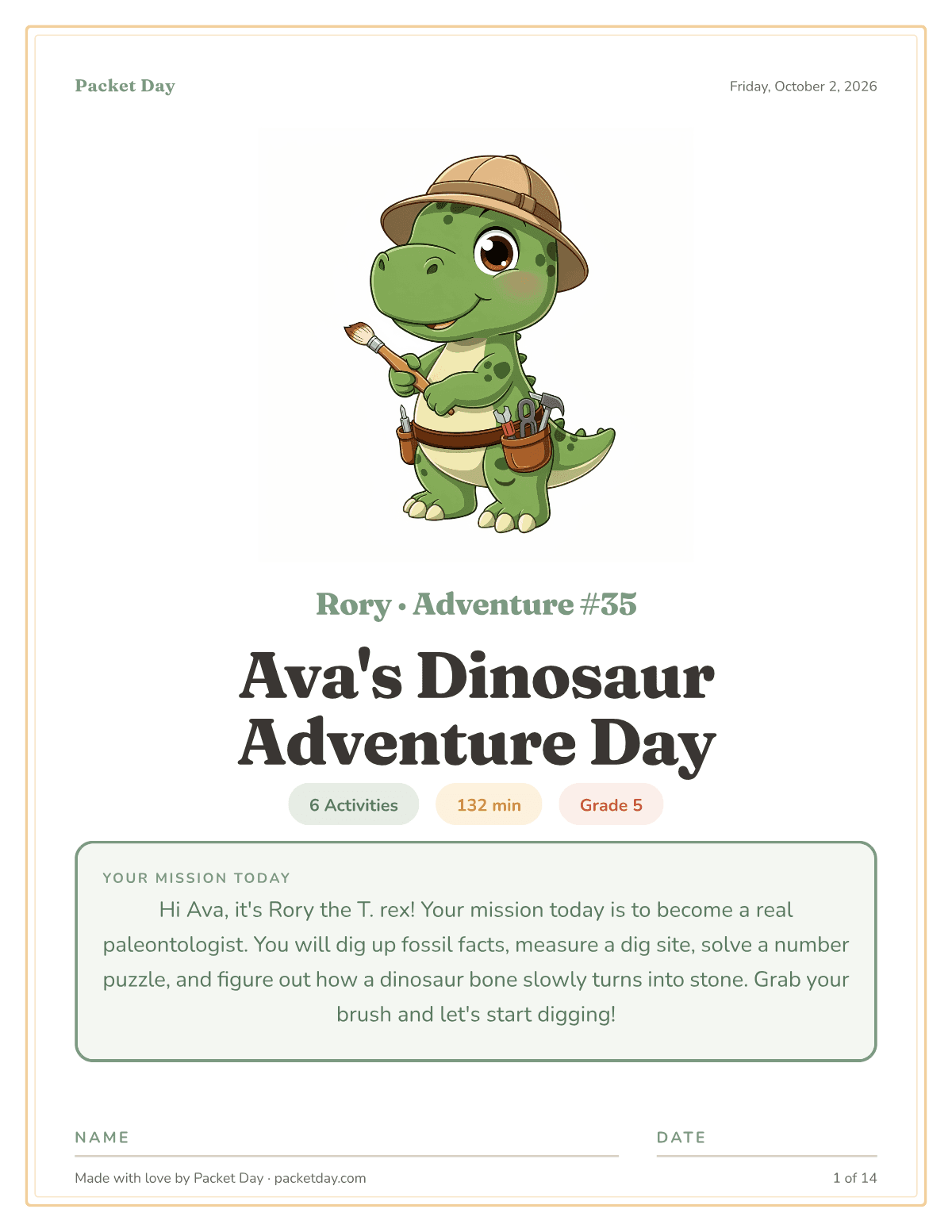
Dinosaurs
Sample made for grade 5
A printable dinosaur unit study on T. rex, Triceratops and how a bone turns into a fossil, shown as a grade 5 sample with dig site math. Free to start.
See the dinosaur packet →Every unit study packet
See all the themes we have made so far, each with real pages from a sample packet.
Browse the unit studies →Packets for the days you need one
Ready for your own shark day?
Packet Day makes print ready, themed learning packets for kids in K to 8, built around whatever your kid is obsessed with.
Make your own shark packet freeFree is 1 packet a month, no card needed. Unlimited is $9 a month billed annually ($108 a year) or $12 month to month.