
Ocean Animal Unit Study Packet for Kids
An ocean animal unit study packet is a printable school day about octopuses, dolphins, sea turtles and how sea creatures survive, for kids in K to 8. Inside this grade 3 sample: math, reading, writing, a maze, movement, science, coloring and a certificate across 14 pages, with a parent answer key. Plan on about 117 minutes. Free to start.
By Natalie, homeschool mom and Packet Day co-founder
Updated November 2026Reviewed by Natalie
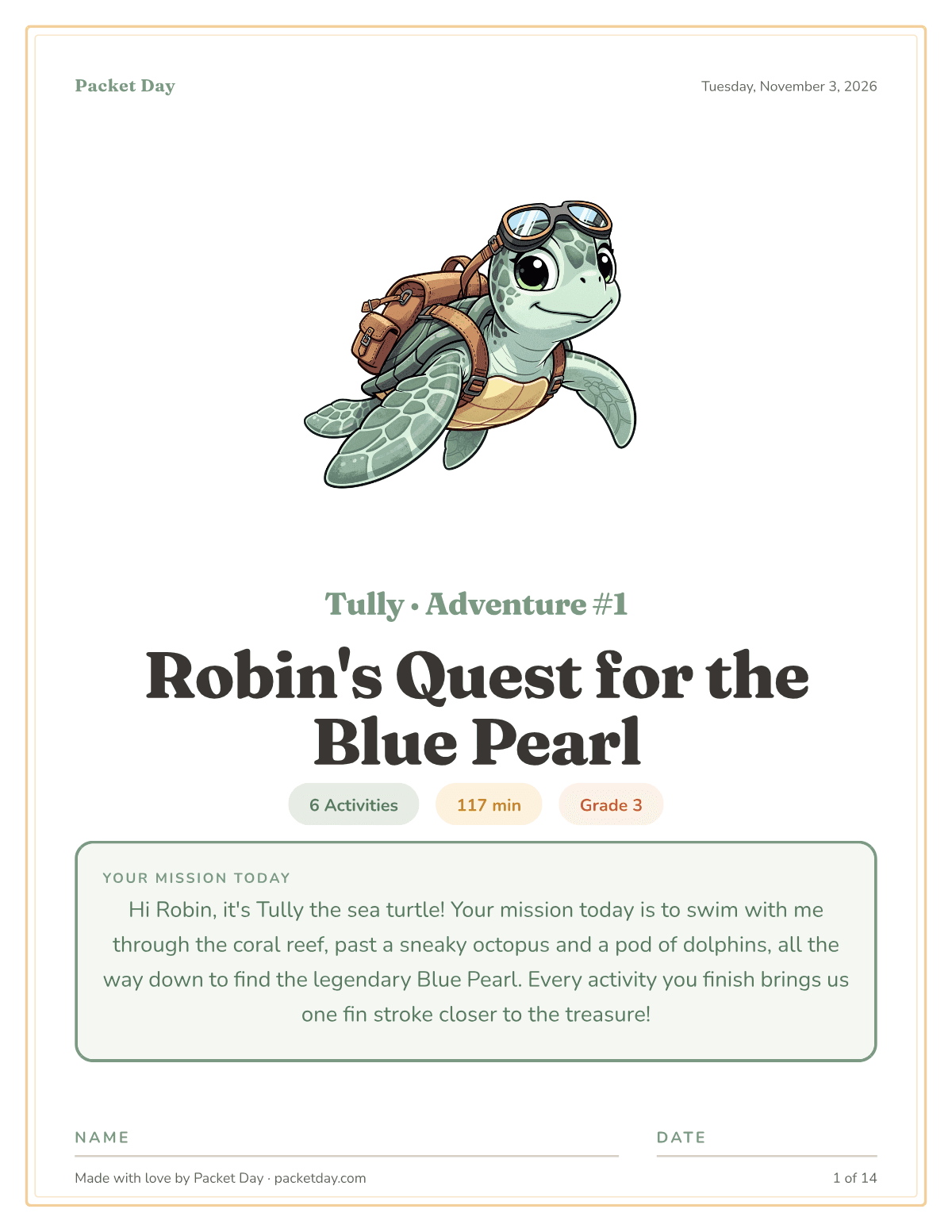
A sample packet made for a grade 3 learner named Robin
What is inside an ocean animal packet?
An ocean animal packet is a full school day on paper: 11 to 17 pages built around ocean animals, roughly 2 to 5 hours with breaks. This sample has 14 pages plus a parent answer key, and Tully the sea turtle guides the whole day.
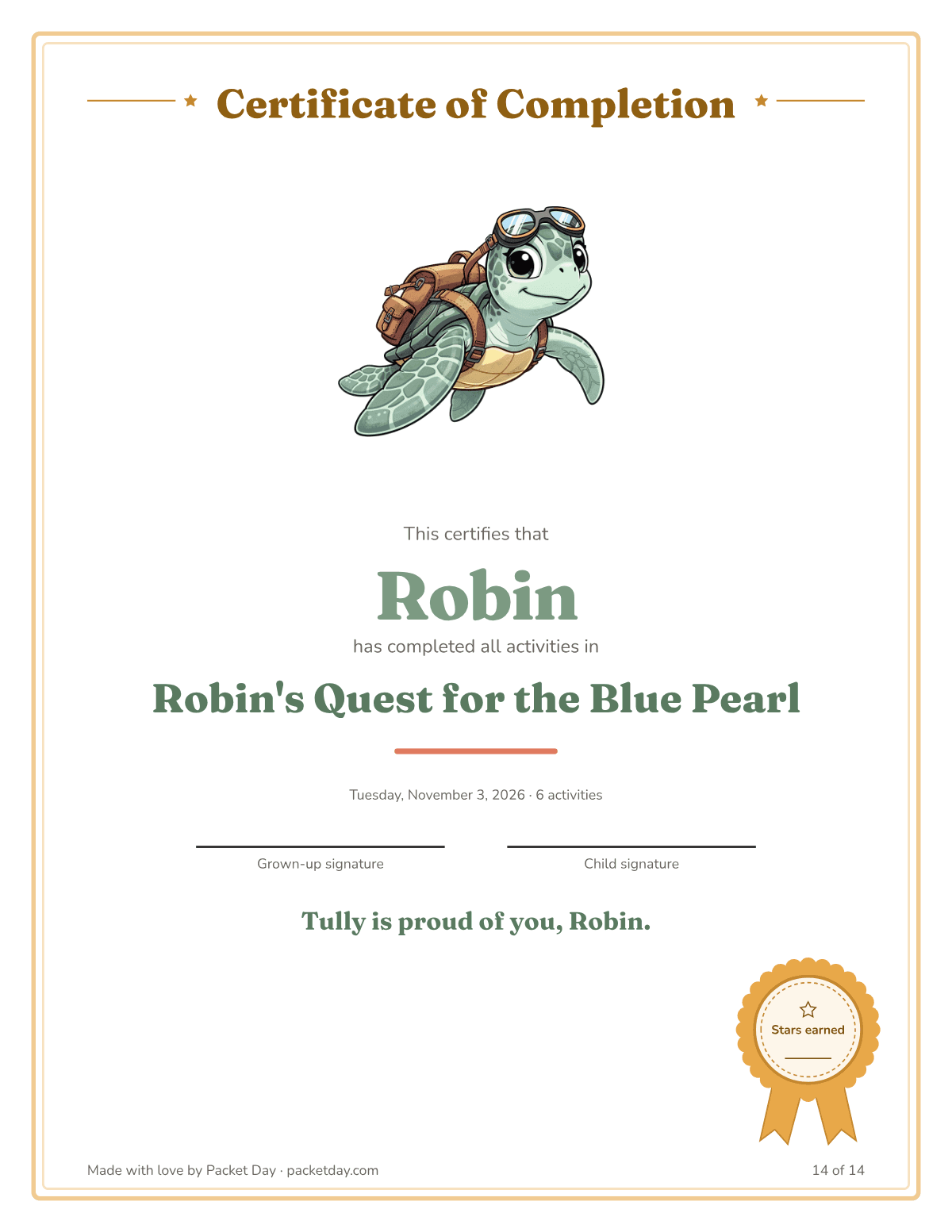
Free printable: Robin's Quest for the Blue Pearl
14 pages, grade 3, answer key included
Want one made for your kid instead? Make one free
What does my child actually do?
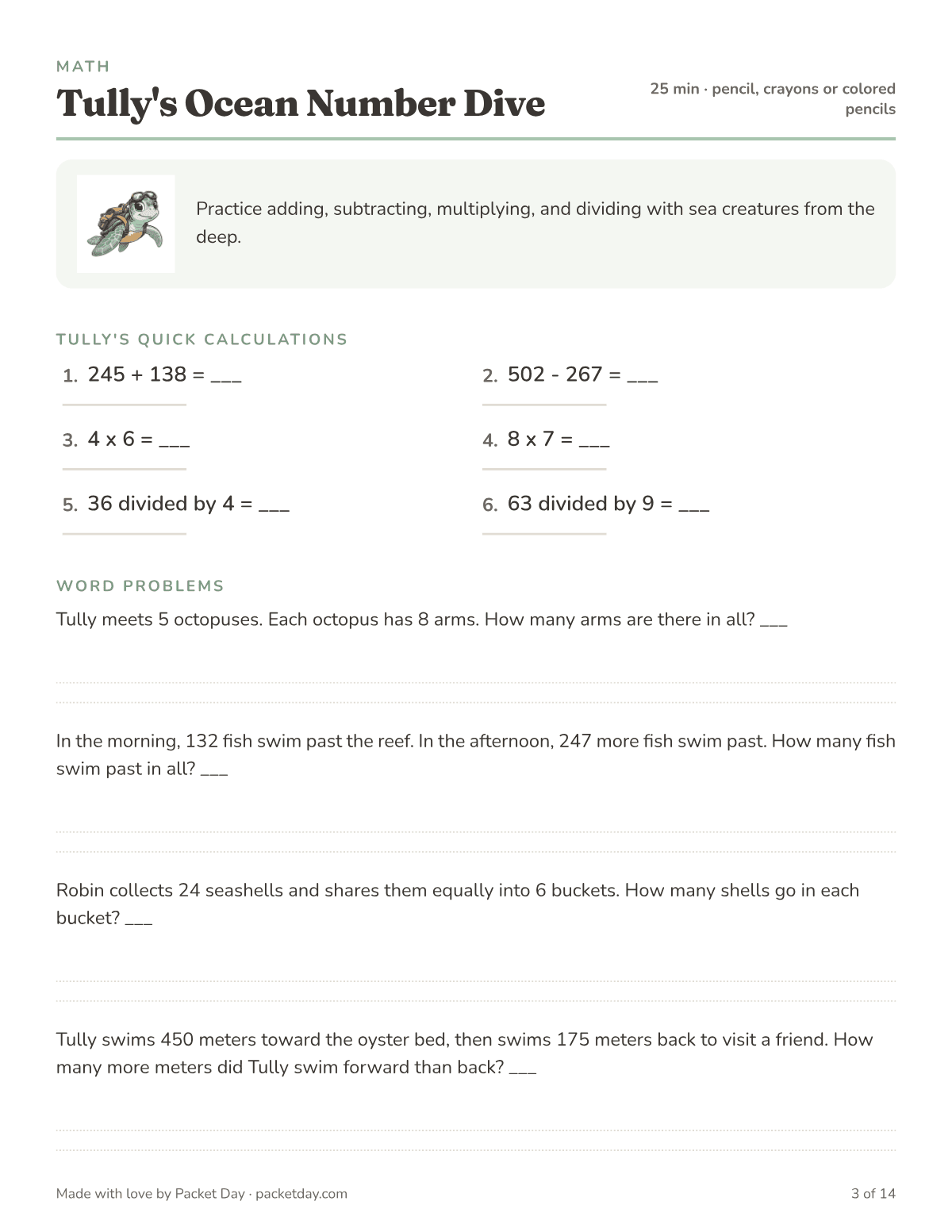
Math
Tully's Ocean Number Dive
Adding up fish at the reef, multiplying octopus arms, sharing seashells into buckets, then drawing 4 starfish and counting every arm.
Reading
The Search for the Blue Pearl
A story of about 300 words with a clownfish, an octopus and a pod of dolphins, then five questions, including whether your kid would have left the pearl behind.
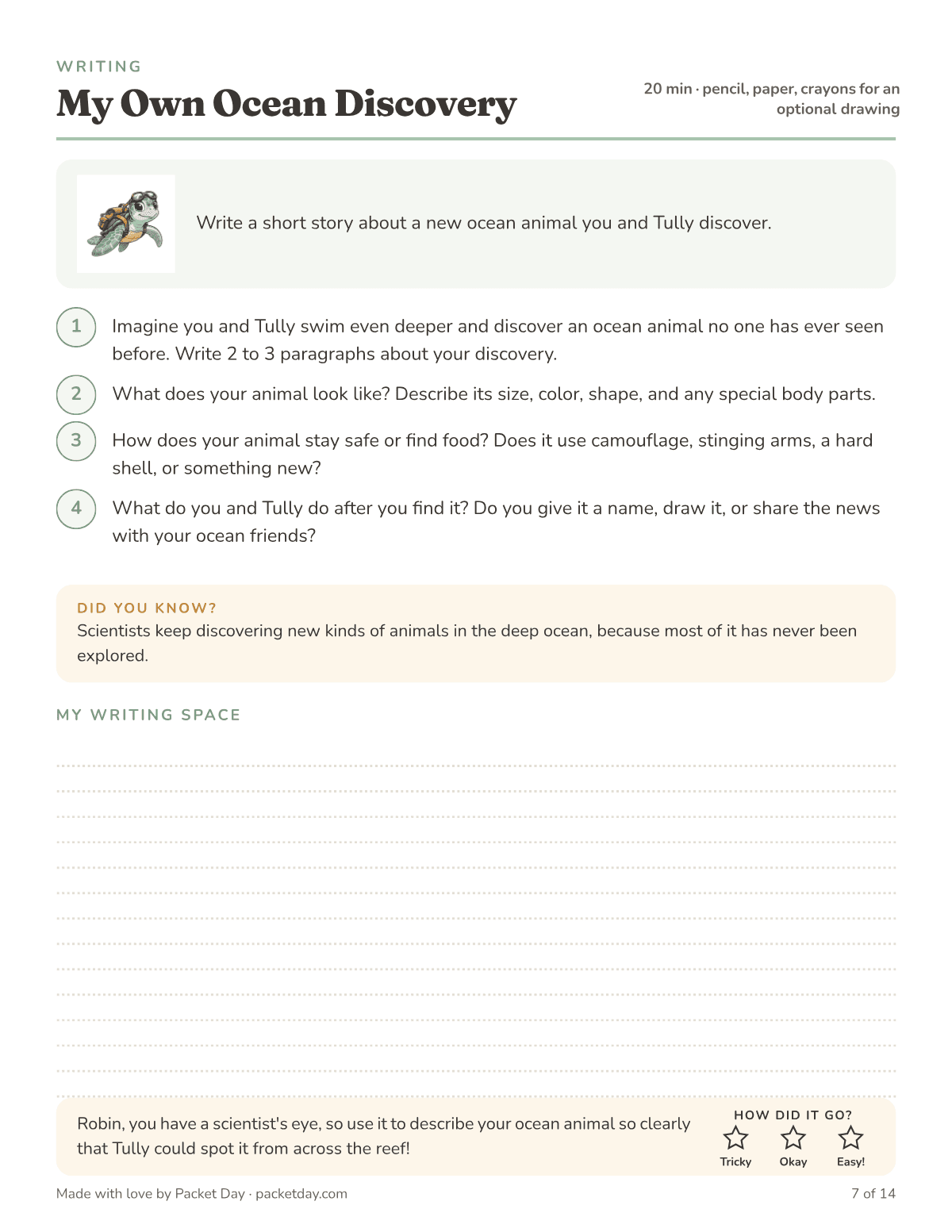
Writing
My Own Ocean Discovery
Two to three paragraphs about an ocean animal no one has ever seen, with prompts for how it looks and how it stays safe.
Puzzle break
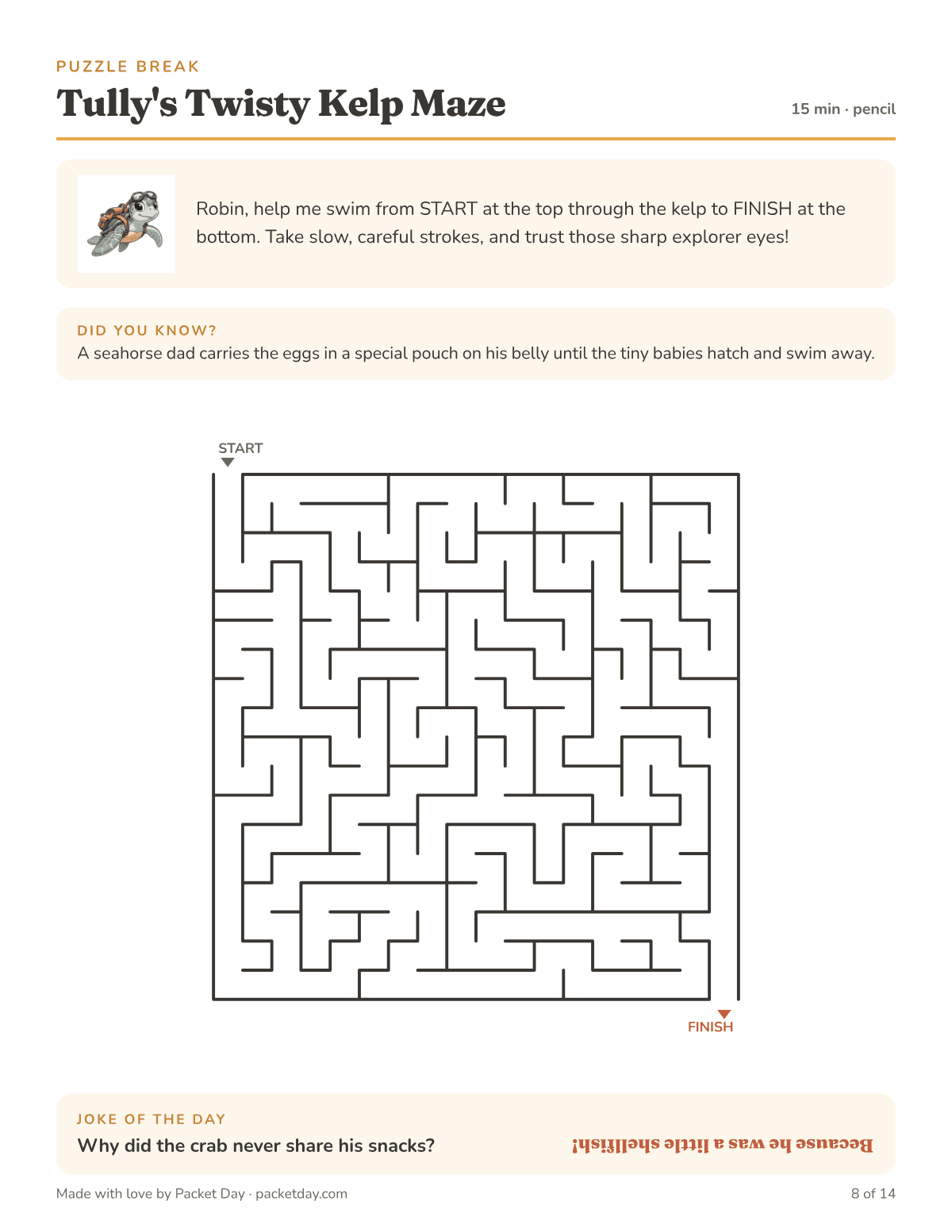
Tully's Twisty Kelp Maze
A square maze from start to finish, a seahorse Did You Know and a joke about a crab who won't share his snacks.
Movement break
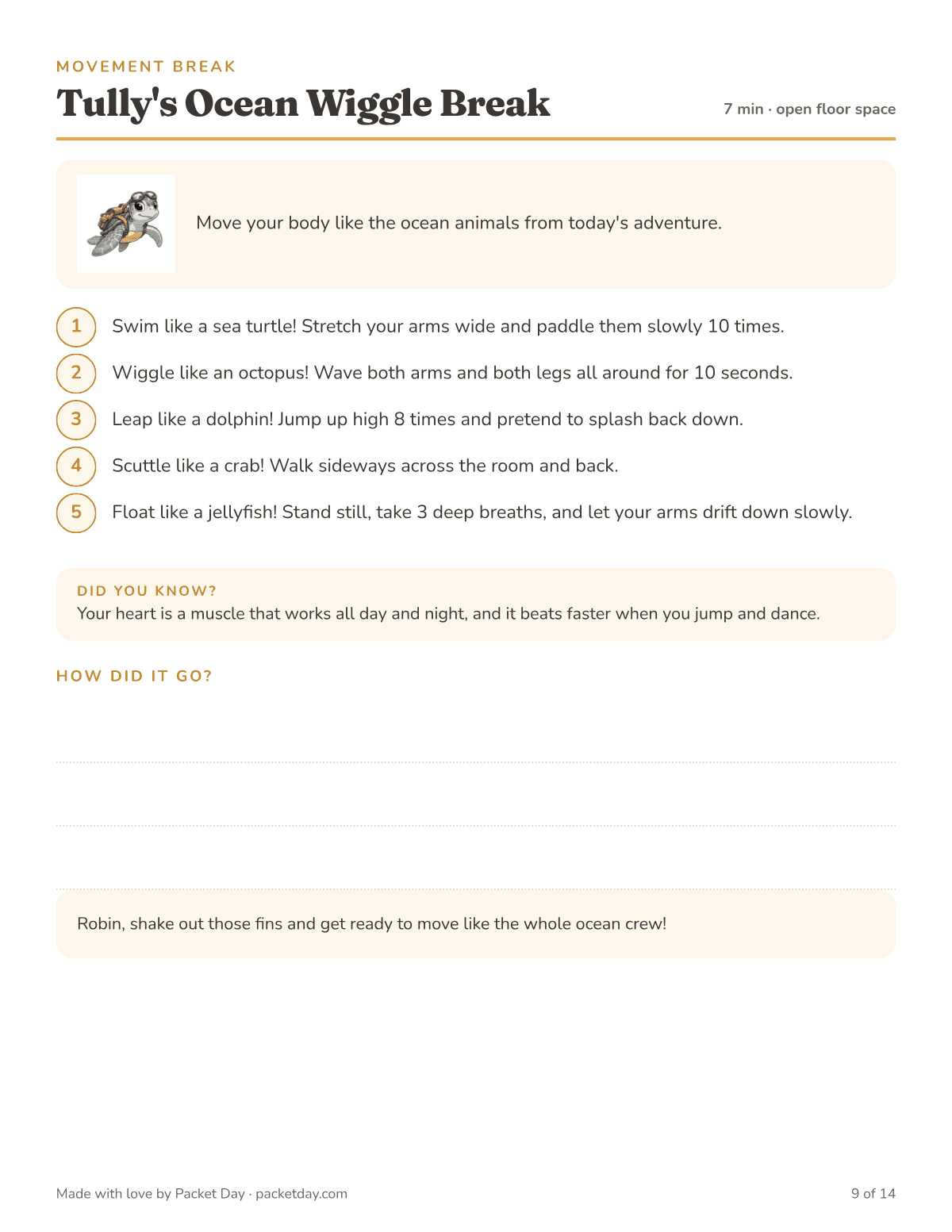
Tully's Ocean Wiggle Break
Turtle paddles, octopus wiggles, dolphin leaps, a sideways crab scuttle, then floating like a jellyfish for three deep breaths.
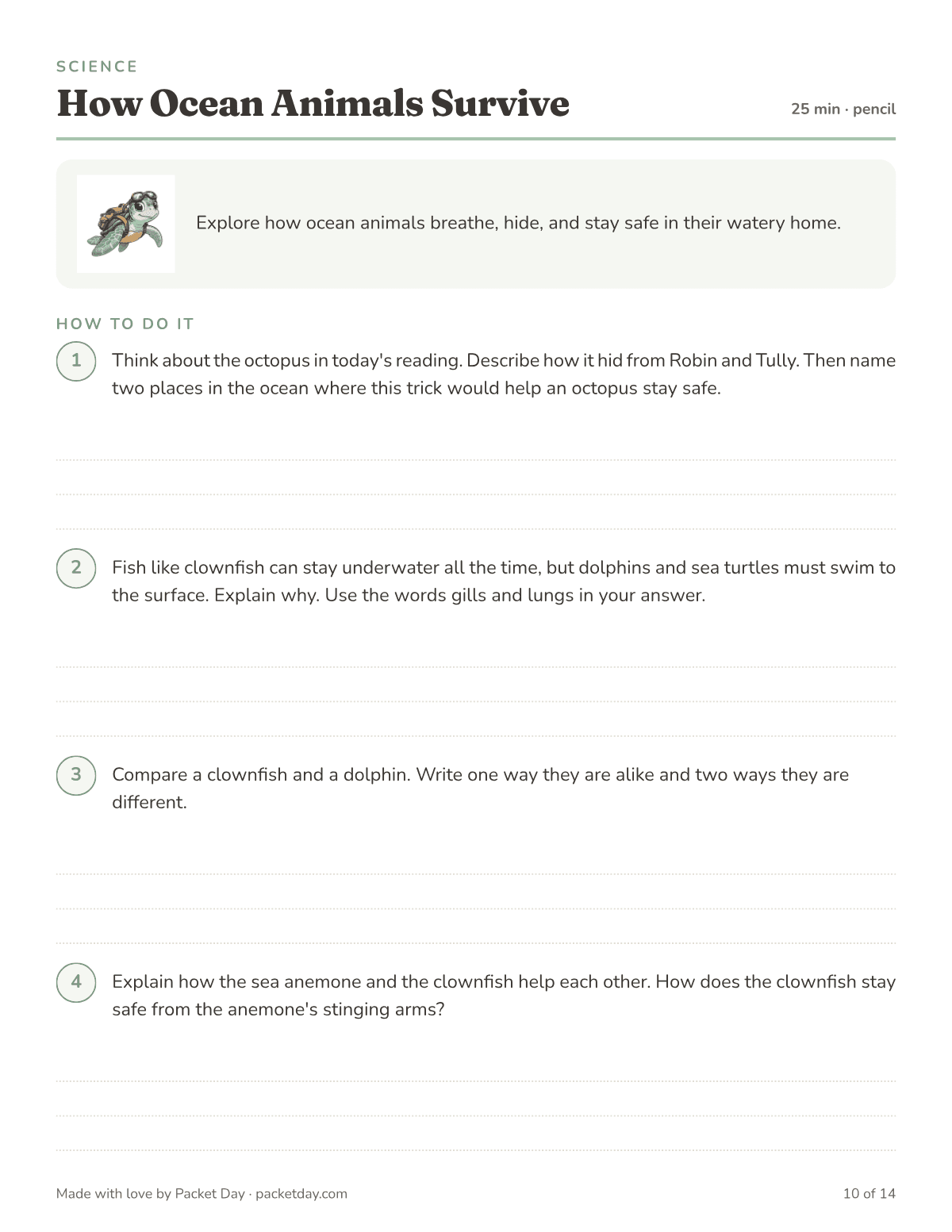
Science
How Ocean Animals Survive
Six questions on camouflage, gills and lungs, blubber and how a clownfish and an anemone help each other, ending with sorting six animals by how they breathe.
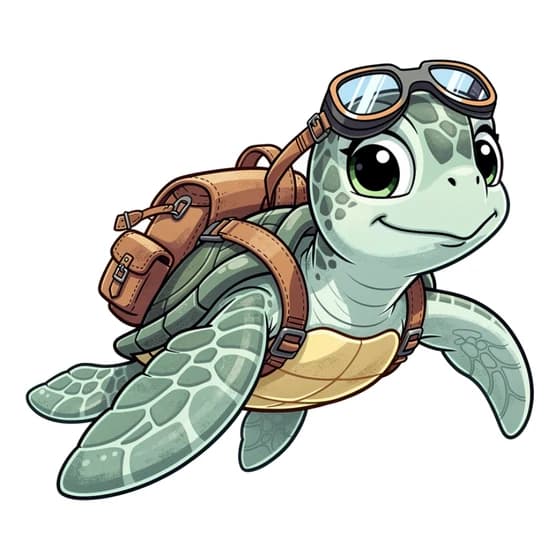
Meet Tully
Tully is a young sea turtle in goggles and a tiny explorer's backpack, on the hunt for a pearl that an old story says is hiding inside an oyster.
This is a guide who teaches along the way. Tully reminds Robin that sea turtles breathe air too and will need a trip to the surface, explains how an oyster builds a pearl one layer at a time, and asks for help getting through the maze. In the math, Tully swims 450 meters toward the oyster bed, then turns back to visit a friend.
A steady turtle is a nice pick for a third grader who feels a little unsure about the deep. When the water turns dark and cold in the story, Tully stays close.
What will my child learn?
Your child gets a full grade 3 day: adding and subtracting three digit numbers, multiplication and division, finding clues in a story, writing two to three paragraphs and explaining how animals survive.
The science turns on one big question: how does each animal breathe? Fish like clownfish use gills, so they can stay under. Dolphins and sea turtles have lungs, so they have to come up for air. Your kid sorts six animals into the two groups and explains how they decided.
Then come the survival tricks. An octopus changes color to blend in. A slimy coating keeps a clownfish safe from an anemone's sting. A whale's thick blubber helps in very cold water. The story ends with a choice, too: Robin leaves the pearl where it belongs, and your kid decides if they would have done the same.
Which grades is this for?
Grades K-2
Younger ocean fans get the same theme with short reading, easy words, math at their grade and a few sentences to write. Each packet gets written for the grade you pick.
Grades 3-5
This sample is grade 3, so we can be specific. The story runs about 300 words and brings in camouflage, mammals and blowhole. The math covers three digit numbers, multiplication facts and basic division, and the writing asks for two to three paragraphs.
Grades 6-8
Middle schoolers can go deeper, with longer passages, harder vocabulary, grade level math and longer written answers. Each one is written from scratch for your kid's exact grade.
A note from Natalie
When we lived in Orange County, we were at the beach all the time. I'd take the kids to Balboa Island, and they'd play in the little tide pools right on the beach.
These days they love Mr. DeMeo's videos on YouTube. We recently watched his one on "creepy" deep sea animals, and the kids decided they weren't that creepy after all. They loved it.
This packet has that same curious feeling. Robin gets a little nervous when the water turns dark, then keeps going anyway. If you have a kid who wants to know what's down there, this one's for them.
Questions parents ask about ocean animal packets
Do octopuses really have three hearts and blue blood?
Yes. Two hearts push blood through the gills, and a third sends it around the rest of the body. The blood looks blue because it uses copper to carry oxygen, where ours uses iron. The octopus in the story brags about both, and a Did You Know after the reading repeats it.
How do oysters make pearls?
When something small gets stuck inside an oyster, the oyster covers it with smooth layers, again and again. After a long time, those layers become a pearl. Tully explains it in the story, and a reading question asks your kid to say it back in their own words. That's a good check that the idea landed.
Can sea turtles breathe underwater?
No. Sea turtles have lungs and breathe air, so they have to come to the surface, just like dolphins do. Tully says so in the story and plans a trip up for air. The science section then asks your kid to explain the difference using the words gills and lungs, which is harder than it sounds.
How do clownfish live in stinging anemones?
A slimy coating on the clownfish keeps it from being stung, so the anemone becomes a safe home. The clownfish pays it back by chasing off some of the animals that eat anemones. The story mentions the coating, and a science question asks your kid how the two animals help each other.
What is the biggest animal in the ocean?
The blue whale. It is the largest animal known to have ever lived, even bigger than the biggest dinosaurs. That fact sits in a Did You Know at the end of the science section, just after a question about how blubber helps a whale in very cold water. Your dinosaur kid may ask for a rematch.
Are these made by AI, and are they any good?
Yes. AI builds each packet around your kid's grade and the theme you type. We homeschool our own kids, we try these at our table, and we fact check the samples we show here. It won't be perfect every time, so look over the story first. The answer key makes the rest quick.
Packets for the days you need one
Road trips
Turn "are we there yet?" into learning they actually want.
See how it works →Sick days
Home sick? Generate their whole school day in a minute or two.
See how it works →Browse every unit study packetSee a full sample packet
Tired of hunting down free worksheets? See the difference.
Keep the learning going
More unit study packets
 Sharks unit studyA printable shark unit study on cartilage skeletons, gills, denticles and the ocean food chain, shown as a grade 3 sample with a reef maze. Free to start.
 Polar animals unit studyA printable polar animals unit study on how penguins and polar bears stay warm, with a blubber glove experiment and grade 3 math. Free to start.
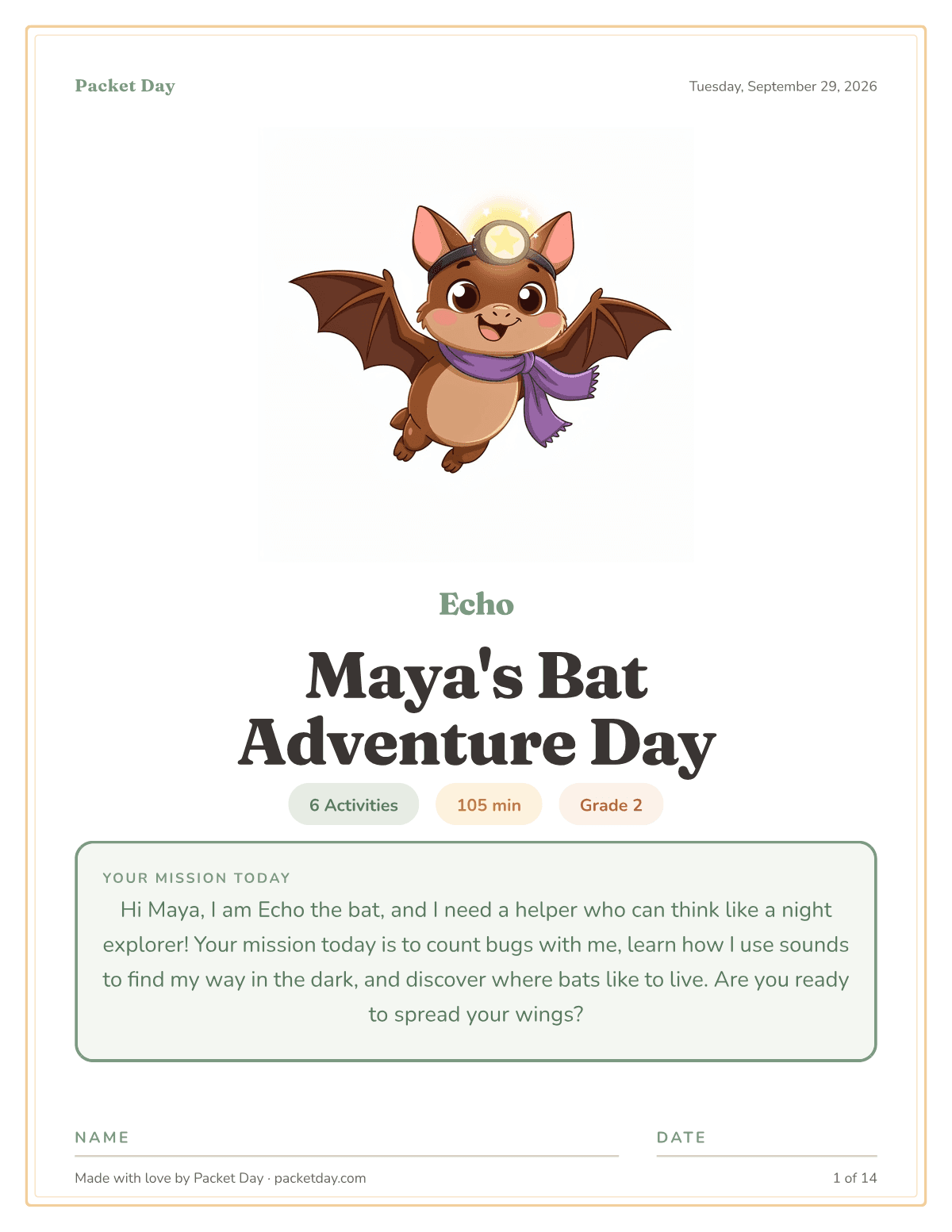 Bats unit studyA printable bats unit study with a bug counting math page, a short echolocation story, a maze and a clap test you can try at home. Free to start.
Packets and guides that fit
- 3rd Grade Homeschool GuideWhat third graders typically learn in math, reading, writing and science, with easy activities for home, a real grade 3 sample packet and official sources.
- Road Trip Activities for Kids That Aren't a TabletEight hours, two kids, one dying tablet battery. Road trip activities that actually work: quiet, screen-free, and zero prep the night before.
Ready for your own ocean animal day?
Packet Day makes print ready, themed learning packets for kids in K to 8, built around whatever your kid is obsessed with.
Make your own ocean animal packet freeFree is 1 packet a month, no card needed. Unlimited is $9 a month billed annually ($108 a year) or $12 month to month.