
Baking Science Unit Study Packet for Kids
A baking science unit study packet is a printable school day about how yeast, gluten and oven heat turn ingredients into food, for kids in K to 8. This grade 4 sample has 14 pages plus a parent answer key: reading, math, a yeast experiment, a number sudoku, movement, writing, coloring and a certificate. About 132 minutes. Free to start.
By Natalie, homeschool mom and Packet Day co-founder
Updated October 2026Reviewed by Natalie
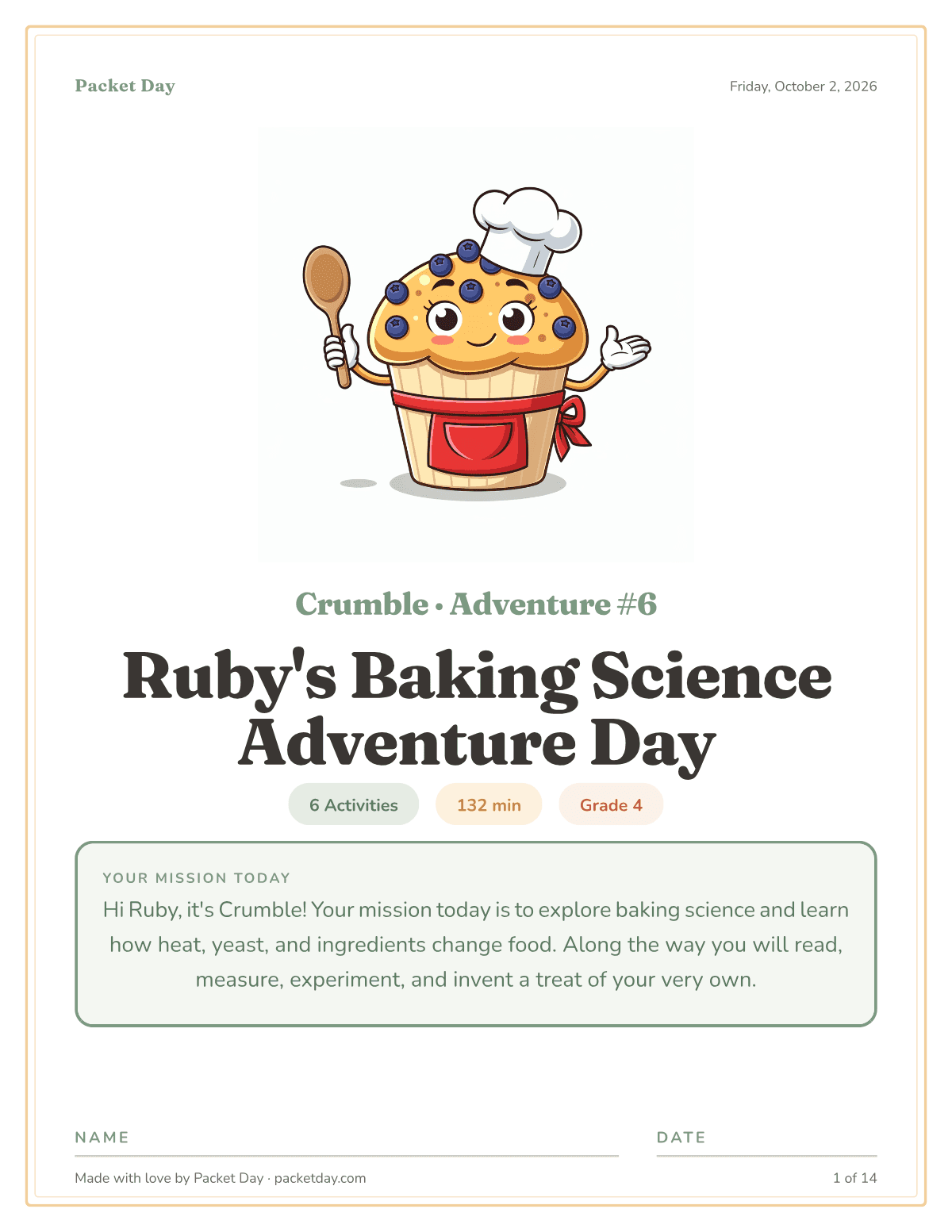
A sample packet made for a grade 4 learner named Ruby
What is inside a baking science packet?
A baking science packet is a full school day on paper: 11 to 17 pages built around baking science, roughly 2 to 5 hours with breaks. This sample has 14 pages plus a parent answer key, and Crumble the muffin guides the whole day.
What does my child actually do?
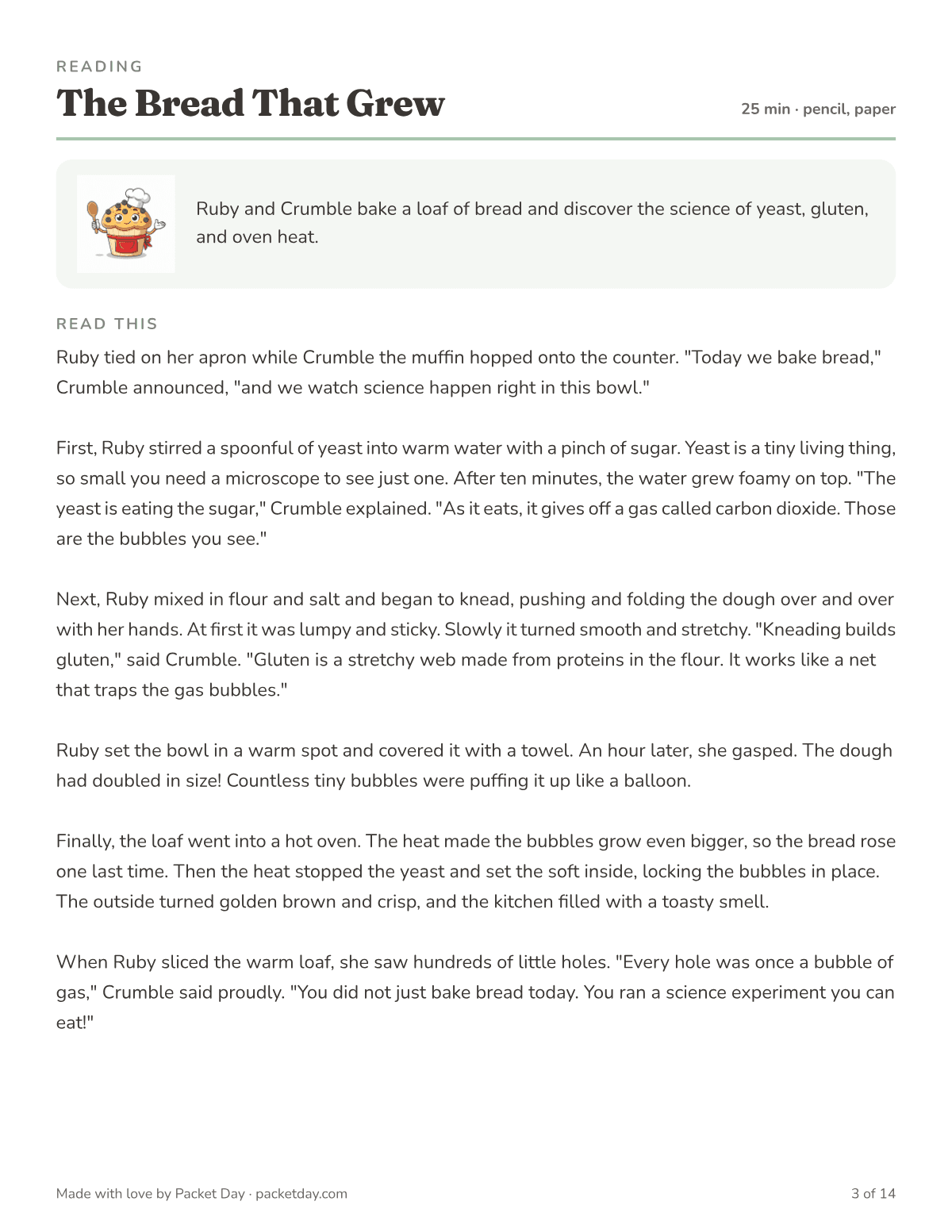
Reading
The Bread That Grew
A story about baking one loaf, from foamy yeast to a golden crust, then five questions about yeast, kneading and gluten.
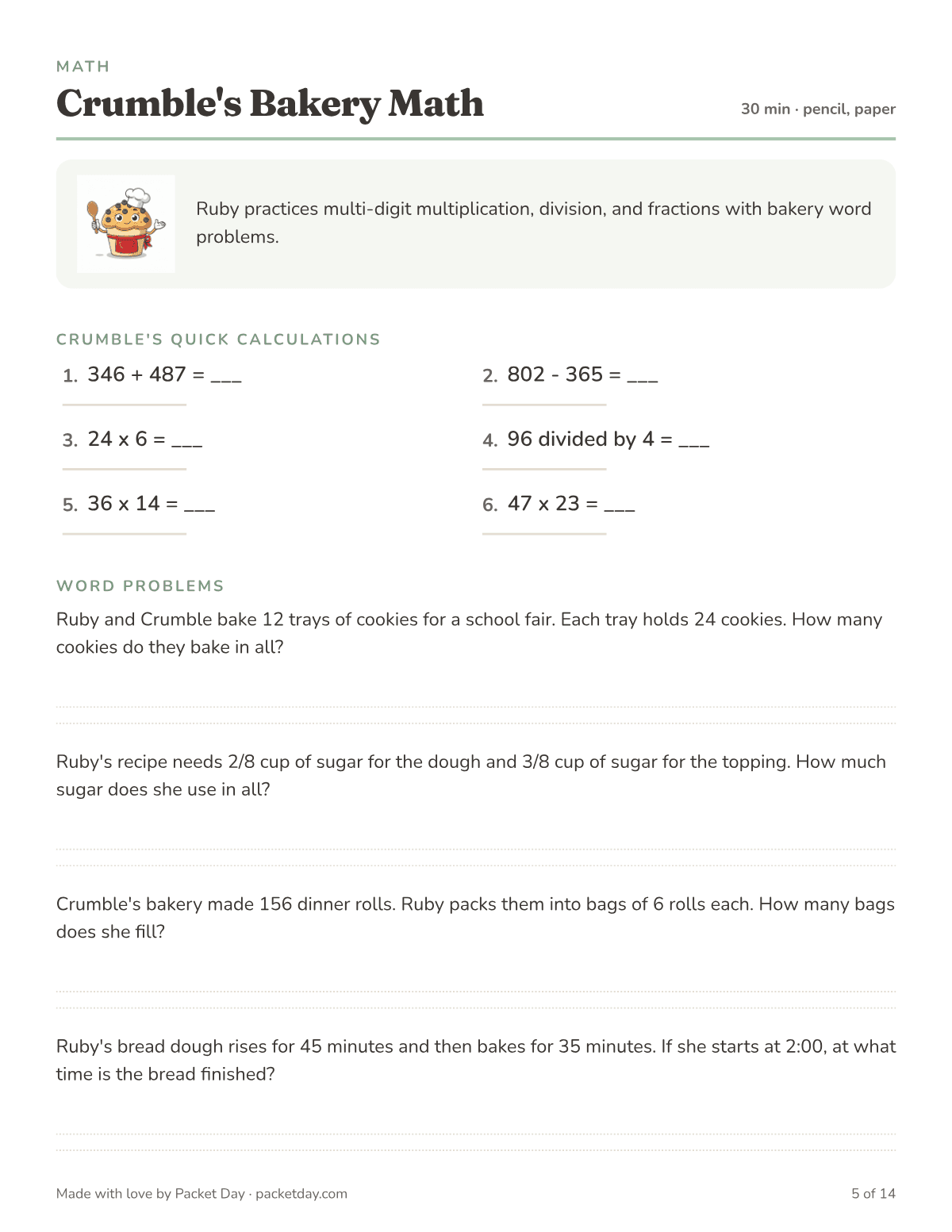
Math
Crumble's Bakery Math
Three digit adding and subtracting, two digit multiplication, fractions with like denominators, bagging 156 rolls and an elapsed time problem.
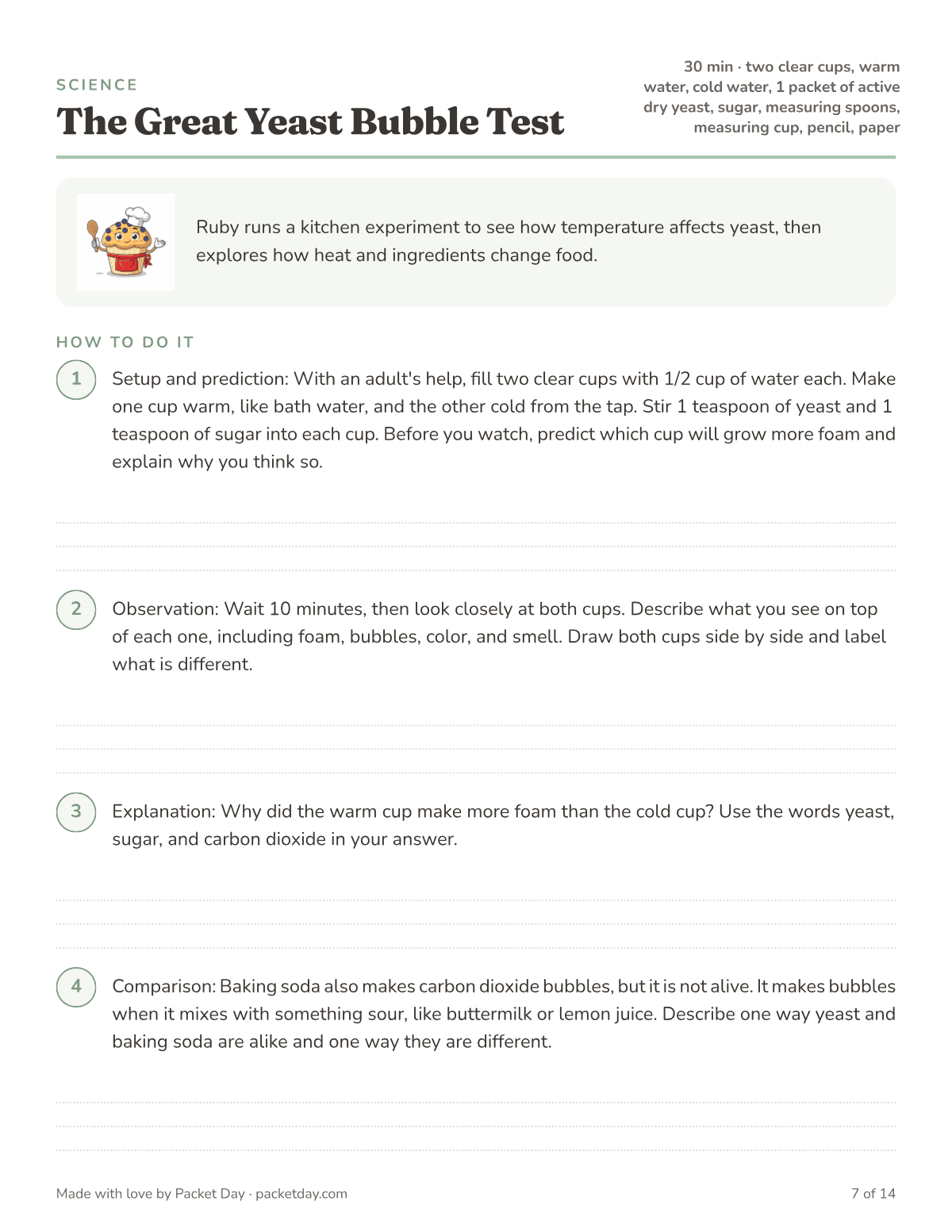
Science
The Great Yeast Bubble Test
A warm cup and a cold cup of yeast and sugar, a prediction, ten minutes of watching, then butter versus pancakes and a loaf with no yeast.
Puzzle break
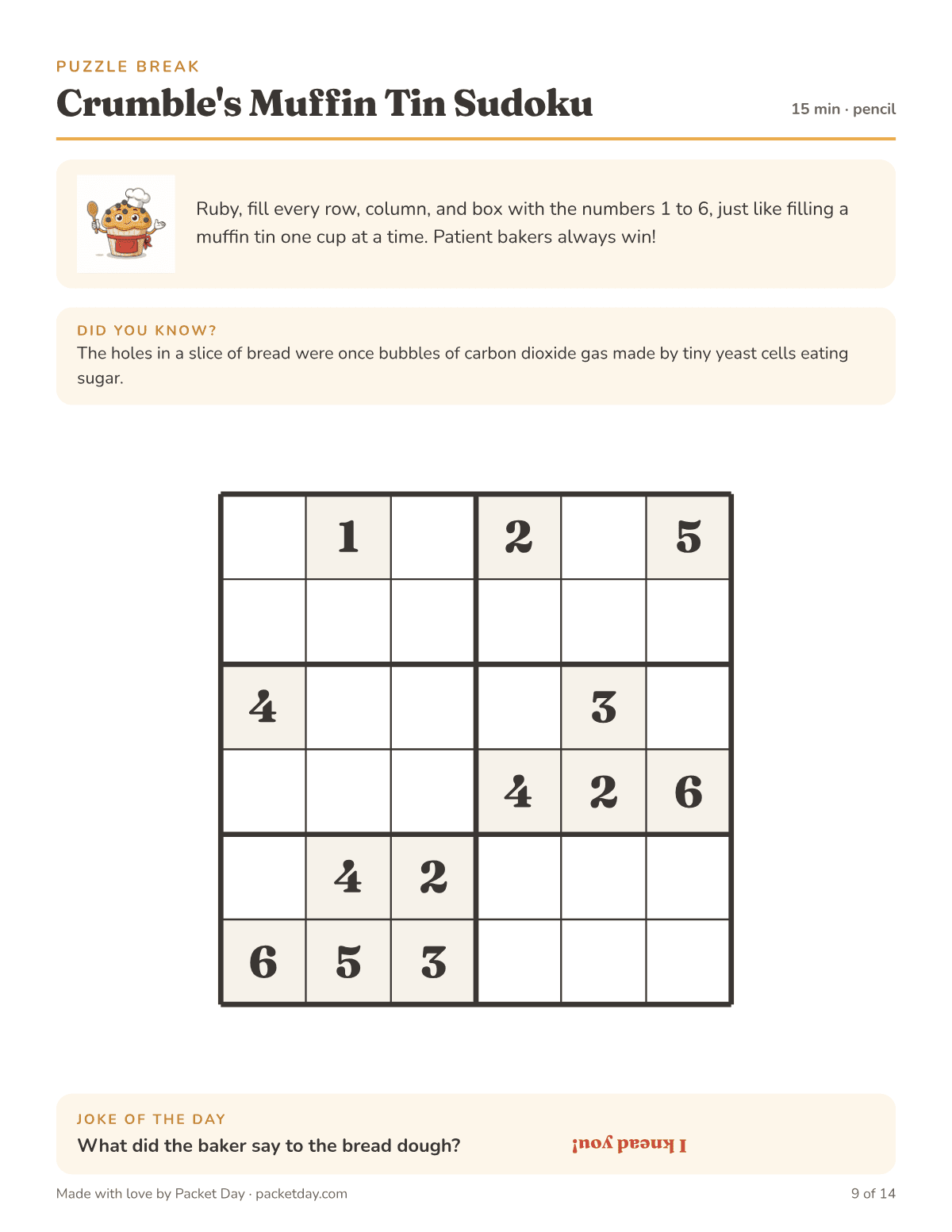
Crumble's Muffin Tin Sudoku
A six by six number sudoku, a fact about the holes in bread and a joke about kneading.
Movement break
Crumble's Rising Dough Dance
Curl up like dough and rise, knead the air, whisk your arms, pop like yeast bubbles and melt like butter.
Writing
Ruby's Bakery Invention
Inventing a brand new treat in at least six sentences, using two science words from the day to explain what the oven does to it.
Meet Crumble
Crumble is a blueberry muffin in a tall chef's hat and a red apron, usually waving a wooden spoon. He hops onto the counter in the reading story and announces that today they bake bread and watch science happen in the bowl.
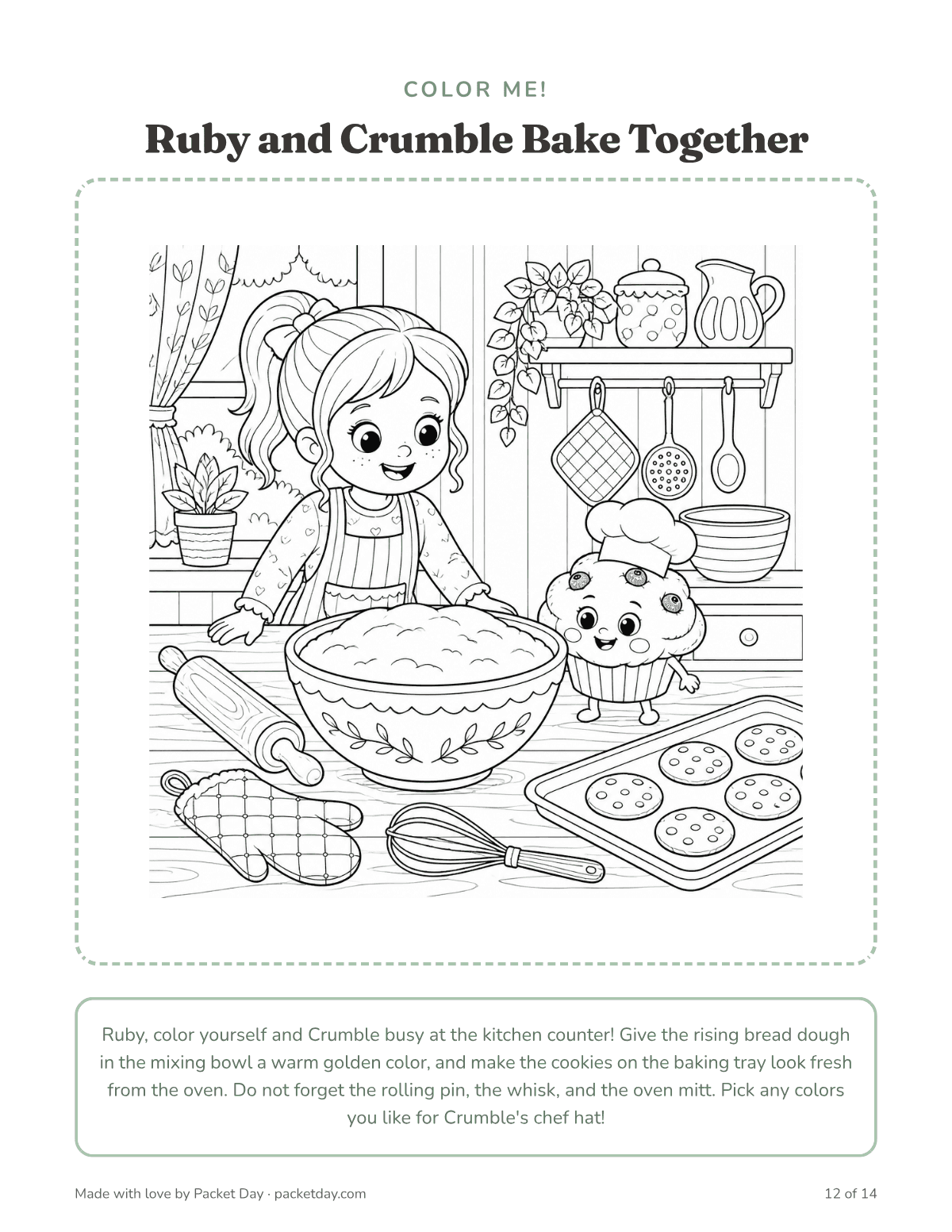
He explains yeast and gluten while Ruby kneads, runs the bakery in the math problems and stands beside Ruby at the counter on the coloring page. The writing prompt ends by asking what Crumble would say after the first bite of Ruby's invention.
A talking muffin is silly, and that is the point. The science in this packet is the real kind, and Crumble keeps it from feeling like a lecture.
What will my child learn?
Your child gets a full grade 4 day: two digit by two digit multiplication, division, adding fractions with like denominators, elapsed time, reading a passage for cause and effect, and writing a descriptive paragraph that uses science vocabulary.
The science is how baking works. Yeast is a tiny living thing. It eats sugar and gives off carbon dioxide gas. Kneading builds gluten, a stretchy web of flour proteins that traps those bubbles. In the oven, the bubbles grow, the heat stops the yeast and sets the inside, and the crust browns.
The experiment turns that into something Ruby can watch. She predicts which cup of yeast will foam more, waits ten minutes, then explains the difference. Later questions sort changes you can undo, like melting butter, from changes you cannot, like cooking batter.
Which grades is this for?
Grades K-2
Little bakers get the same baking theme with shorter reading, simpler words, math at their grade and less writing. Every packet is written fresh for the grade you pick.
Grades 3-5
This sample is grade 4, so we can be specific. The story runs about 280 words. The math reaches 47 x 23, dividing 156 rolls into bags of 6 and adding eighths. The writing asks for a paragraph of at least six sentences.
Grades 6-8
Middle schoolers get the same baking theme with longer passages, harder vocabulary, math at their grade and more writing. Every packet is written fresh for your kid's exact grade.
A note from Natalie
Viv has always loved baking. During the week it's waffles and muffins. On weekends it's something special, like chocolate chip cookies or homemade sourdough made with a starter passed down from her grandfather.
She loves putting on her apron and chef's hat before she starts.
This is the rare packet that practically begs you to finish the day in the kitchen. The parent note even suggests baking a simple loaf or a batch of muffins together sometime that week, so every idea on paper gets a real test.
Questions parents ask about baking science packets
What do I need for the yeast experiment?
Two clear cups, warm and cold water, one packet of active dry yeast, sugar, measuring spoons and a measuring cup. Each cup gets half a cup of water, a teaspoon of yeast and a teaspoon of sugar. Help with the warm cup. It should feel like comfortable bath water, because very hot water can harm the yeast.
Why does the warm cup foam more than the cold one?
Yeast is alive, and it works faster when it is warm. In the warm cup it eats the sugar quickly and gives off carbon dioxide gas, which makes the foam. The cold cup slows it down, so you see little or no foam after ten minutes. Your kid explains this using the words yeast, sugar and carbon dioxide.
What is gluten, in kid words?
Gluten is a stretchy web made from proteins in flour. Kneading the dough builds it, which is why the dough turns from lumpy to smooth and stretchy. The web works like a net that traps the gas bubbles from the yeast. That is why bread rises, and why a slice of bread is full of little holes.
Do we have to actually bake something?
No. The only hands on part is the two cup yeast test, and the rest is paper and pencil. That said, the parent note suggests baking a simple loaf or muffins together that week, and it is a lovely way to see the reading story happen for real. A batch of muffins counts.
Who invented chocolate chip cookies?
Chocolate chip cookies were invented in the United States in the 1930s, when a baker stirred chopped chocolate into her cookie dough. That fact sits on the writing page, right where your kid is inventing a brand new treat of their own. It is a nice nudge that every famous recipe started as somebody's idea.
Are these made by AI, and are they any good?
Yes, AI writes every packet from scratch, around your kid's grade and the theme you type. We are a homeschool family and we test them on our own kids. We also fact check each sample we show you. They are good and not perfect, so read the story first. The answer key keeps checking fast.
More unit study packets
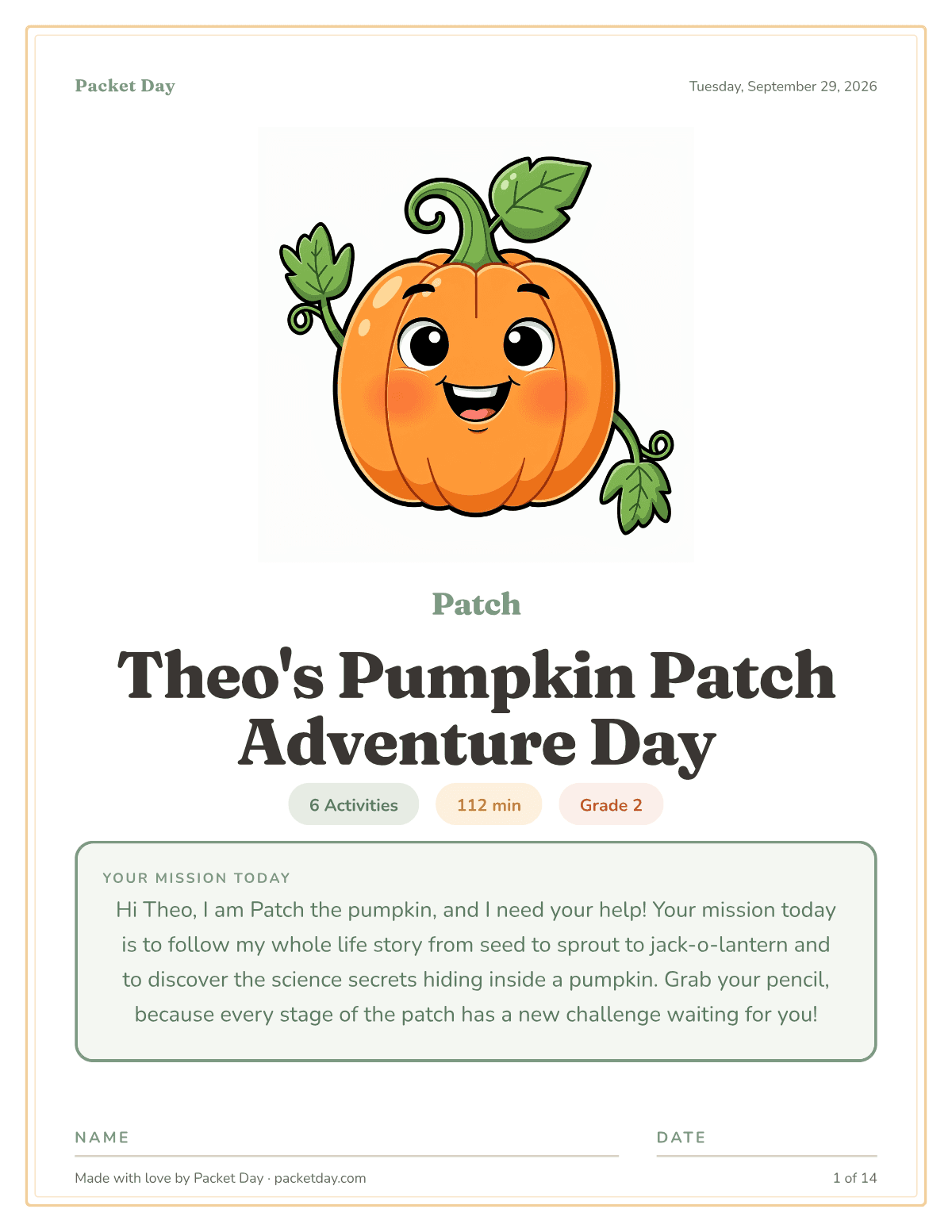
Pumpkins
Sample made for grade 2
A printable pumpkin unit study that follows one pumpkin from seed to jack-o-lantern, with a float test, skip counting and a shape sudoku. Free to start.
See the pumpkins packet →
Thanksgiving
Sample made for grade 4
A printable Thanksgiving unit study on the Mayflower, the 1621 harvest and the Wampanoag Three Sisters garden, with real grade 4 math. Free to start.
See the Thanksgiving packet →Every unit study packet
See all the themes we have made so far, each with real pages from a sample packet.
Browse the unit studies →Packets for the days you need one
Ready for your own baking science day?
Packet Day makes print ready, themed learning packets for kids in K to 8, built around whatever your kid is obsessed with.
Make your own baking science packet freeFree is 1 packet a month, no card needed. Unlimited is $9 a month billed annually ($108 a year) or $12 month to month.