
Farm Animal Unit Study Packet for Kids
A farm animal unit study packet is a printable school day about barns, baby animals and what farm animals need, for kids in K to 8. Inside this grade 1 sample: math, reading, writing, a word search, movement, science, coloring and a certificate across 14 pages, with a parent answer key. Plan on about 93 minutes. Free to start.
By Natalie, homeschool mom and Packet Day co-founder
Updated November 2026Reviewed by Natalie
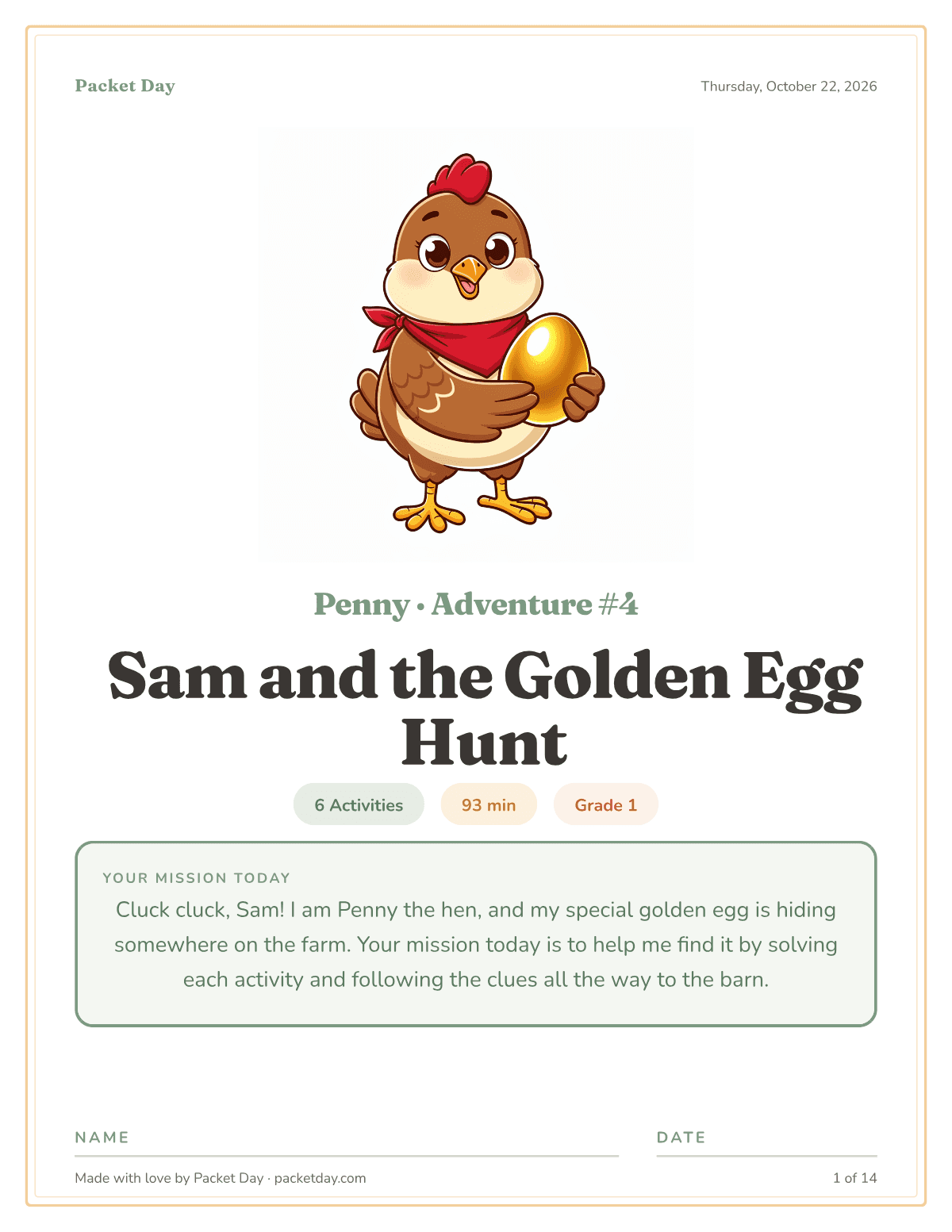
A sample packet made for a grade 1 learner named Sam
What is inside a farm animal packet?
A farm animal packet is a full school day on paper: 11 to 17 pages built around farm animals, roughly 2 to 5 hours with breaks. This sample has 14 pages plus a parent answer key, and Penny the hen guides the whole day.
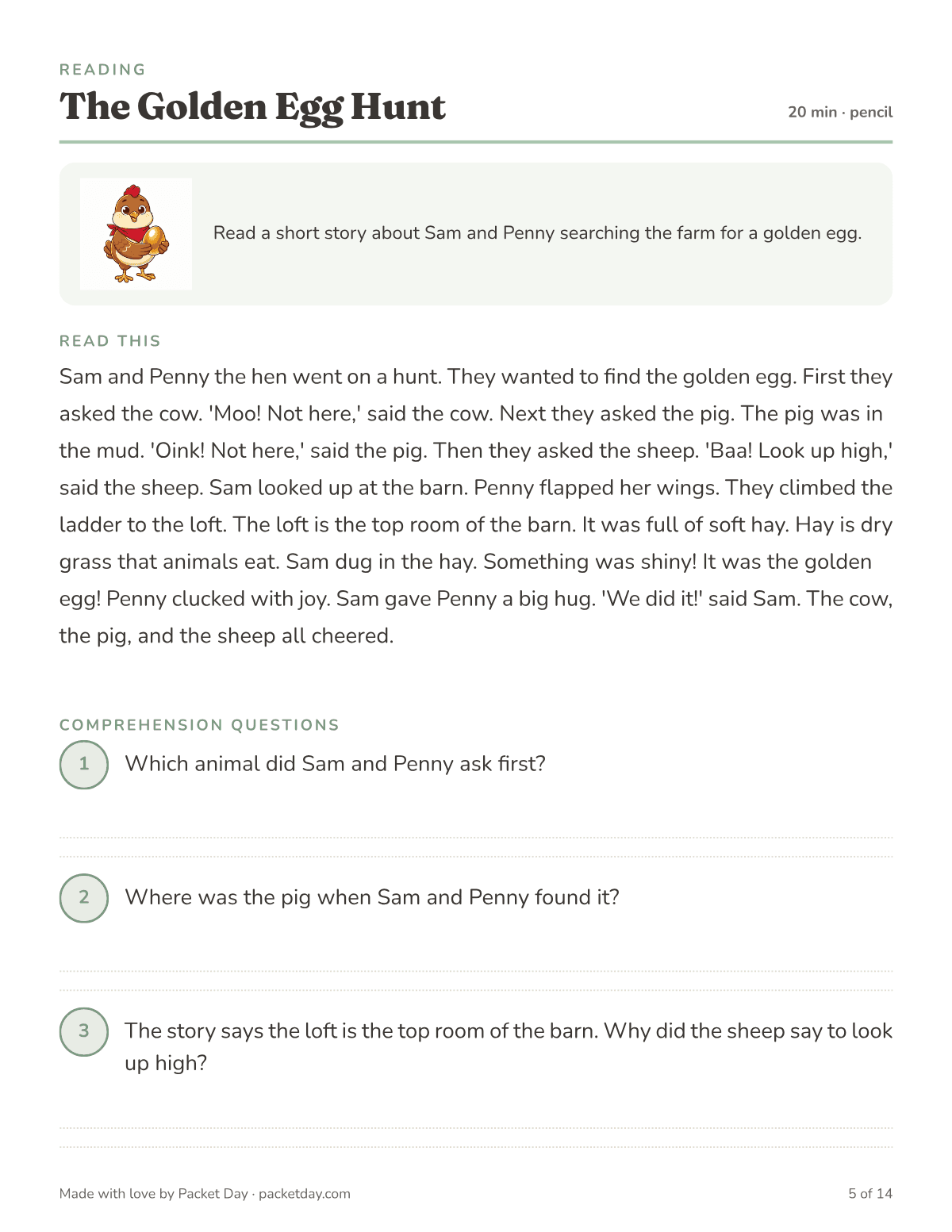
Free printable: Sam and the Golden Egg Hunt
14 pages, grade 1, answer key included
Want one made for your kid instead? Make one free
What does my child actually do?
Math
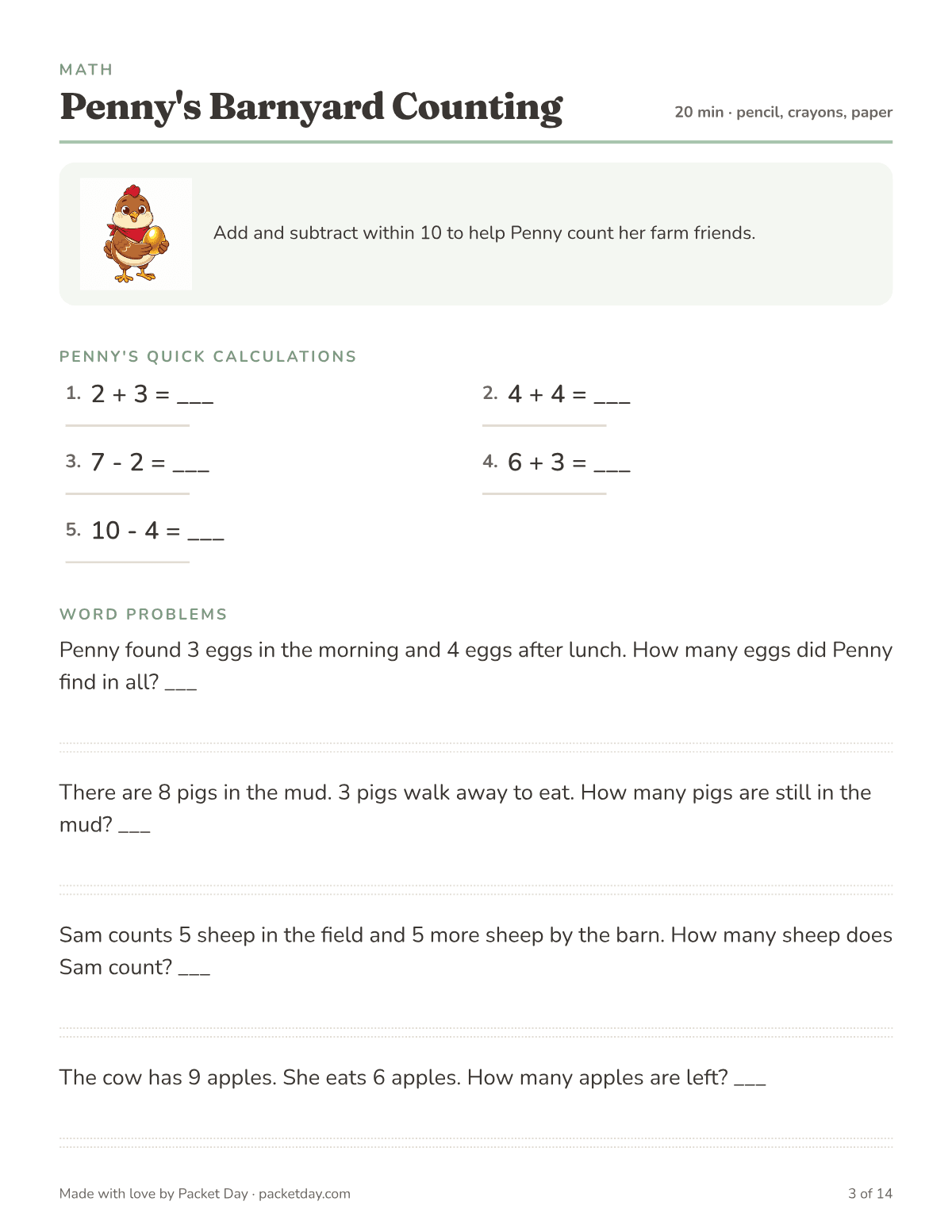
Penny's Barnyard Counting
Eggs before and after lunch, pigs leaving the mud and a cow with 9 apples, then 6 chicks to draw and 2 to cross out.
Reading
The Golden Egg Hunt
Moo and oink lead nowhere until a sheep says to look up high. Then your kid answers five questions and tells about a time they found something lost.
Writing
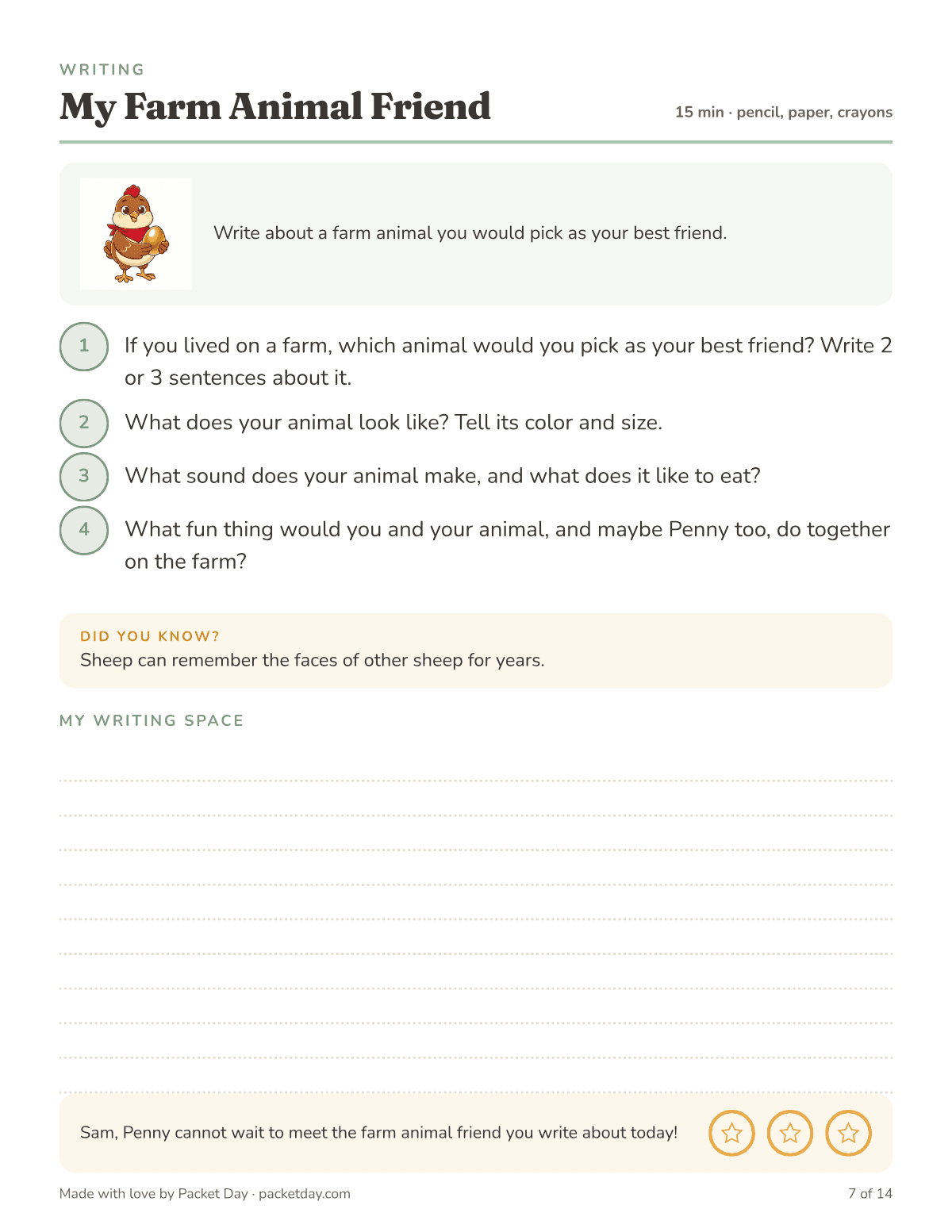
My Farm Animal Friend
Two or three sentences about the farm animal your kid would pick as a best friend, with prompts for color, size, sound and food.
Puzzle break
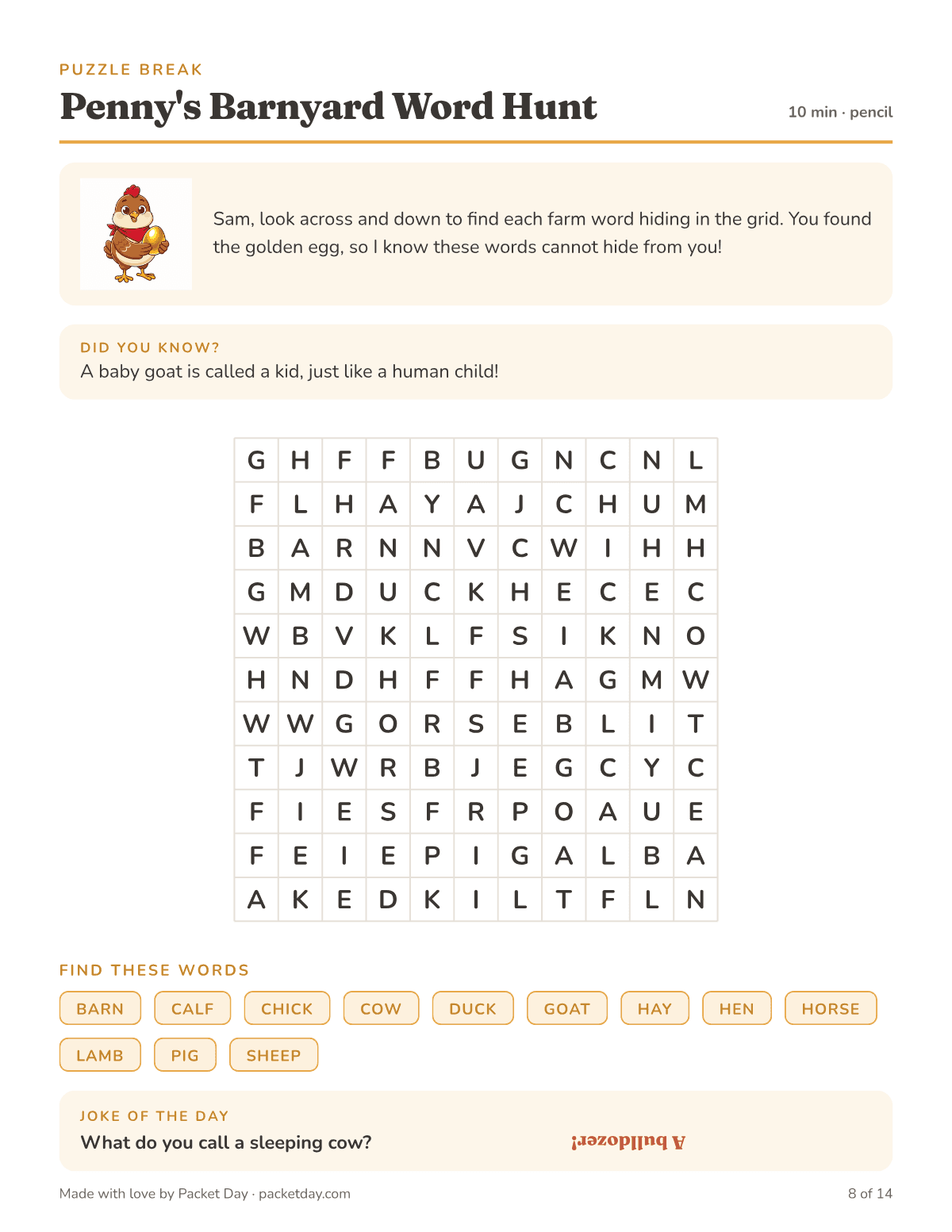
Penny's Barnyard Word Hunt
Hunt for barn, duck, hay and nine more in a grid of letters, then turn the page around for the sleeping cow punch line.
Movement break
Barnyard Wiggle Dance
Clucking, cow stomps, lamb hops, a muddy pig wiggle and a horse gallop, then three deep breaths.
Science
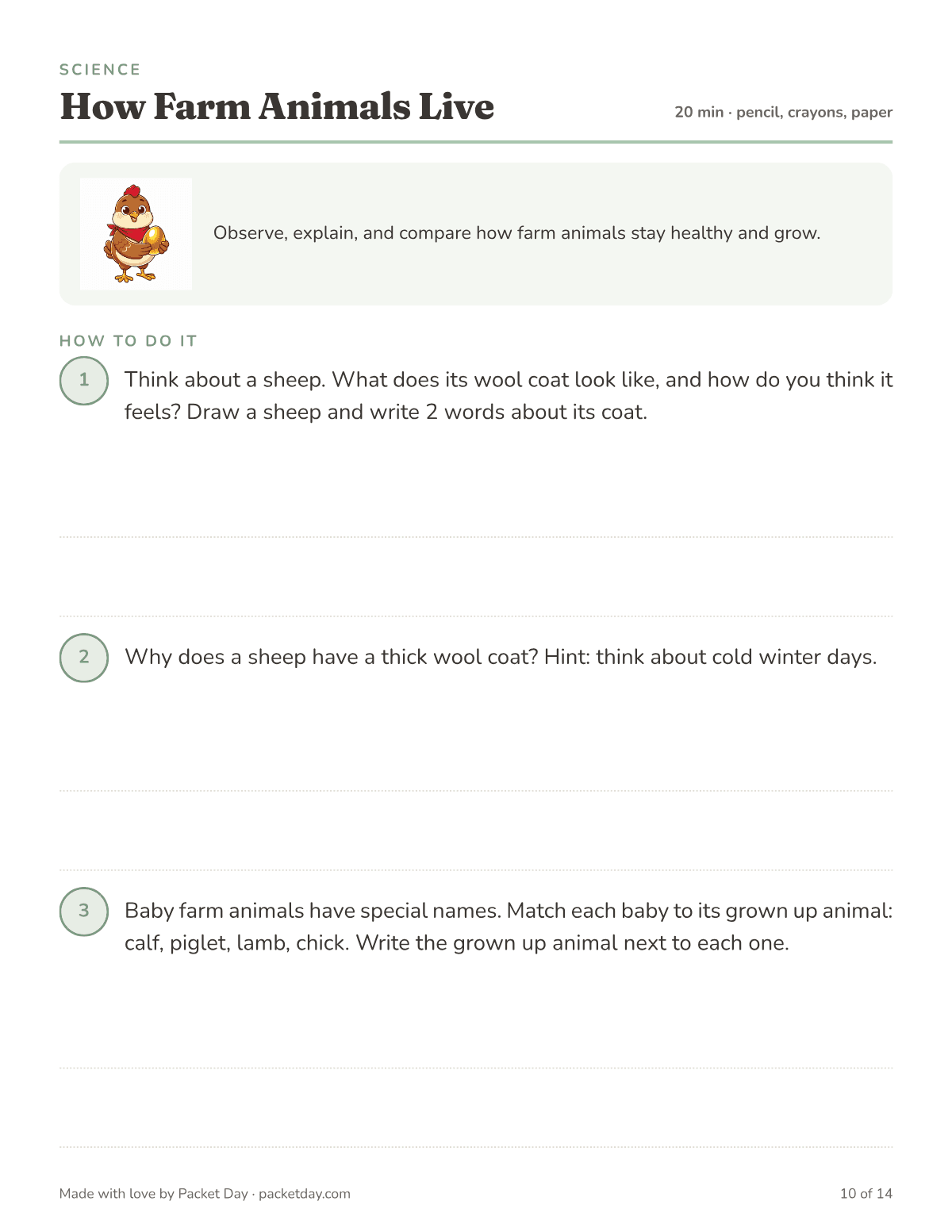
How Farm Animals Live
Draw a woolly sheep, work out how a hen and a cow are alike, and decide what a farmer should do about an empty water bucket on a hot day.
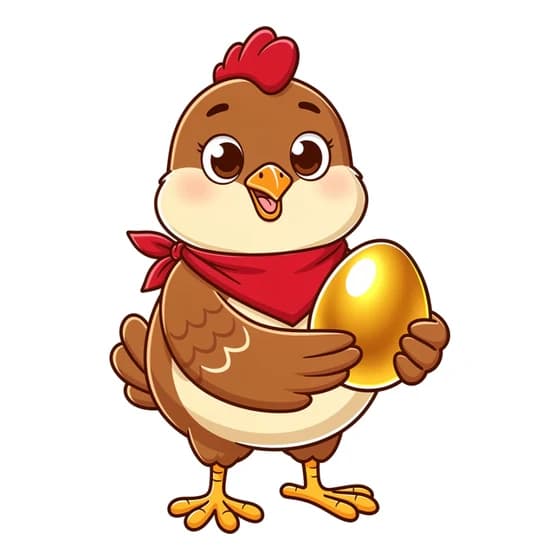
Meet Penny
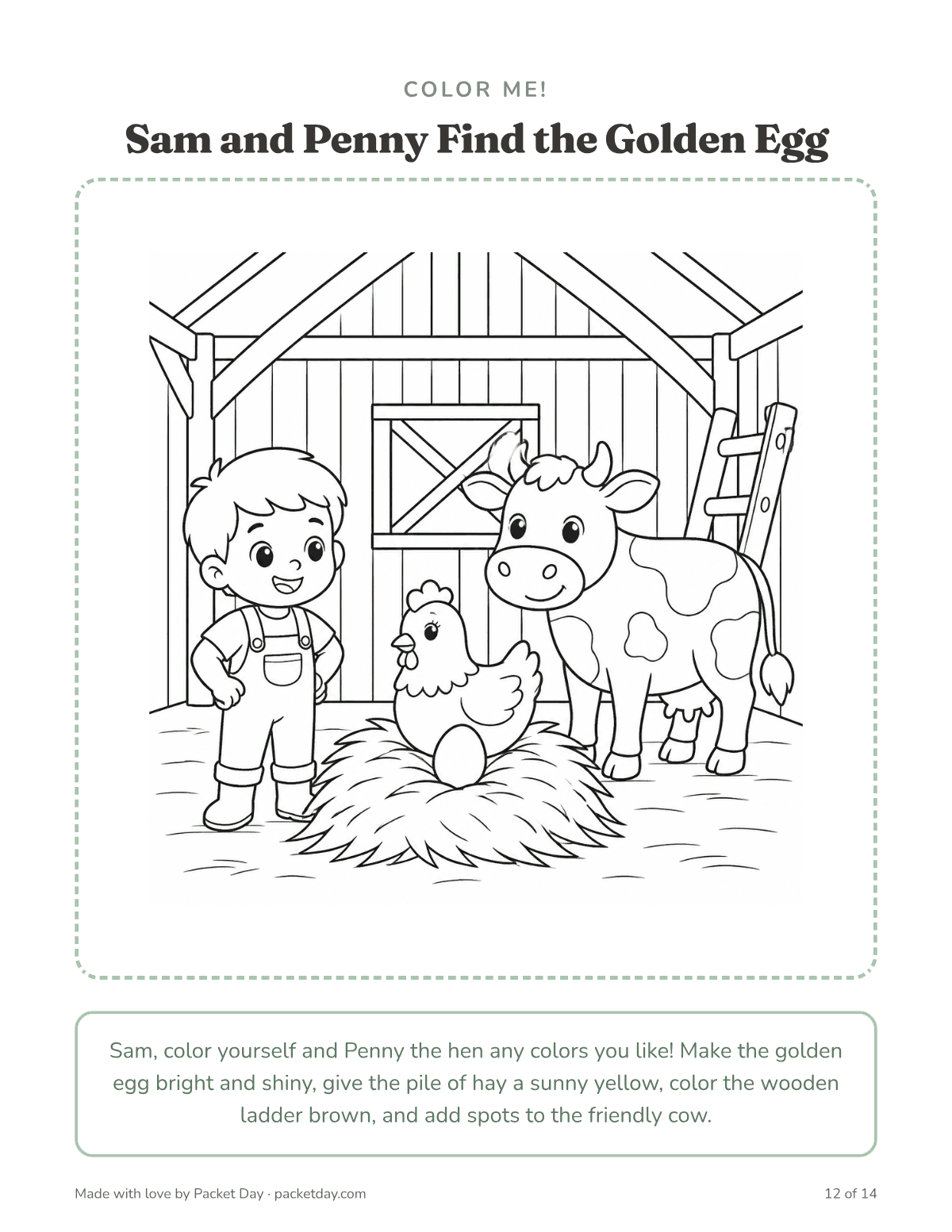
Cluck cluck. That's how Penny opens the day, and then she gets straight to the point: something of hers is missing, and she needs your kid's help to get it back.
She runs all through the packet, which keeps a six year old turning pages. She counts her chicks in the math, flaps her wings in the story and even turns into a science question: how is a hen like Penny different from a cow? On the writing page she says she can't wait to meet the animal your kid picks.
First graders love being the helper. Because Penny needs them, finishing the next page feels like doing a favor for a friend.
What will my child learn?
Your child gets a full grade 1 day: sums and take aways up to 10, reading a short story and finding answers in it, writing two or three sentences, and thinking through what animals need to stay healthy.
The farm facts are real and kid sized. A sheep's thick wool keeps it warm. Hay is dry grass that animals eat. A cow's stomach has four parts that help it break down grass. Pigs roll in mud to stay cool, because they cannot sweat very much.
The best question comes last. The water bucket in the barn is empty on a hot day. What will the animals need, and what should the farmer do? There's no trick to it, and that's the point. It starts a real talk about what it means to take care of an animal.
Which grades is this for?
Grades K-2
This sample is grade 1, so we can be specific. Loft and hay get explained right inside the story, so nobody has to stop and ask. Numbers stay at 10 or under, and writing is two or three sentences. Drawing first is welcome, and so is invented spelling.
Grades 3-5
Bigger kids get the farm too, with longer stories, harder words, math at their grade and more writing. Every packet is built fresh for the grade you choose.
Grades 6-8
Middle schoolers can take farm animals further, with longer passages, tougher vocabulary, grade level math and full paragraphs. Each packet is written from scratch for your kid's exact grade.
A note from Natalie
Every fall we head to a farm near us with lots of animals. Over the years it has become a tradition to stop and see the big turtle that lives there.
Vivian wants to pet and feed every animal she can reach. Oliver likes to watch from a little farther back. Same farm, two very different kids.
This packet works for both kinds. Your petter gets to pick a farm animal best friend on the writing page. Your watcher gets a story, a puzzle and plenty of time to think about what animals need.
Questions parents ask about farm animal packets
What are baby farm animals called?
A baby cow is a calf, a baby pig is a piglet, a baby sheep is a lamb and a baby chicken is a chick. A baby goat is called a kid, which first graders find very funny. The science section has your child write the grown up beside four babies, and the word hunt hides calf, chick and lamb.
Why do pigs roll in mud?
Mostly to stay cool. Pigs cannot sweat very much, and wet mud cools them longer than plain water because it dries slowly. The story puts its pig right in the mud, and a Did You Know after the reading questions explains why. Your kid can act it out later with the muddy pig wiggle in the movement break.
Do cows really have four stomachs?
Not quite. A cow has one stomach with four parts, and people shorten that to four stomachs. Those parts work together to break down the tough grass a cow eats. The packet says it the accurate way in a Did You Know at the end of the science section, so ask your kid to guess before they read it.
Can sheep really remember faces?
Yes. In a study published in Nature, sheep remembered 50 other sheep faces for more than two years. The writing page has a short Did You Know about it, right above the lines where your kid picks a farm animal best friend. It's a good fact to pull out if your child thinks sheep are the boring choice.
Can we do a farm unit study without visiting a farm?
Yes. Every page works at the kitchen table, and you only need a pencil, crayons and paper. No real animals required. If you do have a farm or petting zoo nearby, take the science questions along and let your kid look for the answers in person. Wool and hay make a lot more sense up close.
Are these made by AI, and are they any good?
Yes. AI drafts every packet from your kid's grade and theme, and no two come out alike. We are a real homeschool family, and we fact check each sample we show on this site. Packets are good, not flawless, so give the story a quick read first. The answer key takes care of everything else.
Packets for the days you need one
Sick days
Home sick? Generate their whole school day in a minute or two.
See how it works →Multiple kids
Two kids, two levels, one of you. One packet per kid fixes that.
See how it works →Browse every unit study packetSee a full sample packet
Tired of hunting down free worksheets? See the difference.
Keep the learning going
More unit study packets
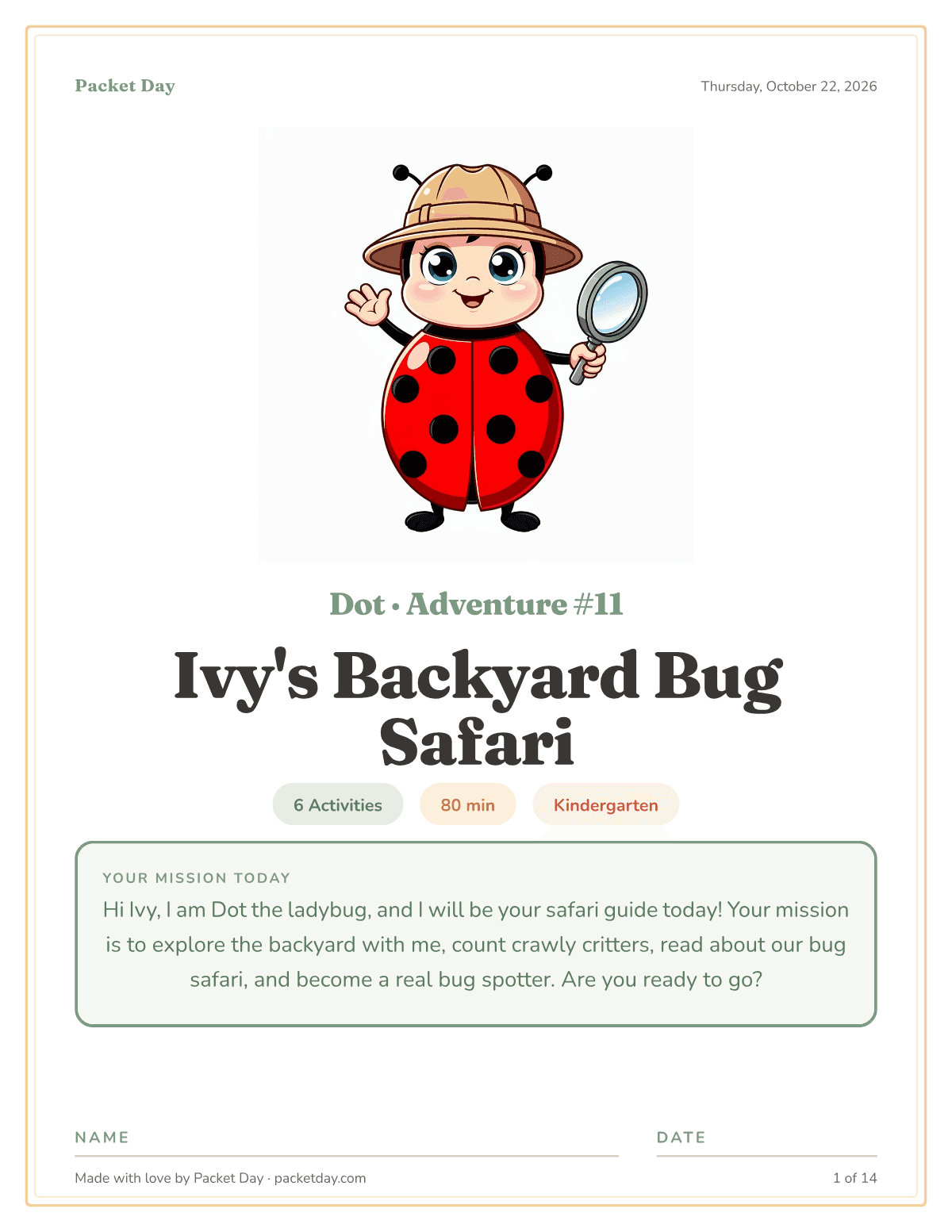 Bugs and Backyard Critters unit studyA printable bug unit study on ants, spiders, snails and worms, shown as a kindergarten sample with a real outdoor bug hunt and a crossword. Free to start.
 Trains unit studyA printable train unit study for December: steam engines, freight cars, signals and whistles, shown as a grade 1 sample with a snowy ride. Free to start.
 Pumpkins unit studyA printable pumpkin unit study that follows one pumpkin from seed to jack-o-lantern, with a float test, skip counting and a shape sudoku. Free to start.
Packets and guides that fit
- 1st Grade Homeschool GuideWhat first graders typically learn in reading, math, writing and science, with easy activities for home, a real grade 1 sample packet and official sources.
- What To Do When Your Kid Is Home Sick (But Not Sick Enough to Sleep)Your kid's home sick but not sick enough to sleep? Here's how to fill the day with calm, quiet learning. No prep, no screens, no guilt.
Ready for your own farm animal day?
Packet Day makes print ready, themed learning packets for kids in K to 8, built around whatever your kid is obsessed with.
Make your own farm animal packet freeFree is 1 packet a month, no card needed. Unlimited is $9 a month billed annually ($108 a year) or $12 month to month.