
Bug Unit Study Packet for Kids
A bug unit study packet is a printable school day about ants, bees, snails, spiders and worms, for kids in K to 8. Inside this kindergarten sample: math, reading, writing, a crossword, movement, outdoor science, coloring and a certificate across 14 pages, with a parent answer key. Plan on about 80 minutes. Free to start.
By Natalie, homeschool mom and Packet Day co-founder
Updated November 2026Reviewed by Natalie
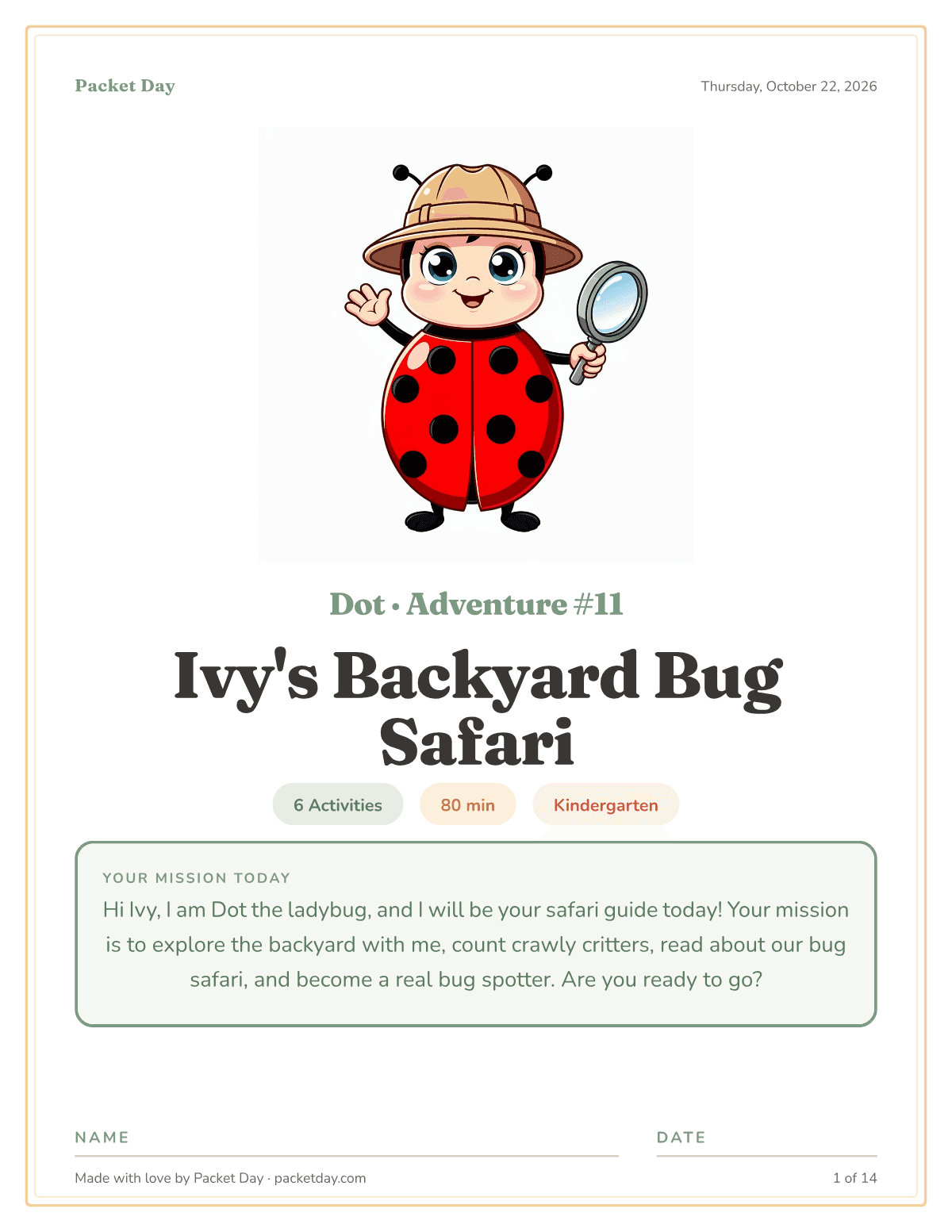
A sample packet made for a kindergarten learner named Ivy
What is inside a bug packet?
A bug packet is a full school day on paper: 11 to 17 pages built around bugs and backyard critters, roughly 2 to 5 hours with breaks. This sample has 14 pages plus a parent answer key, and Dot the ladybug guides the whole day.
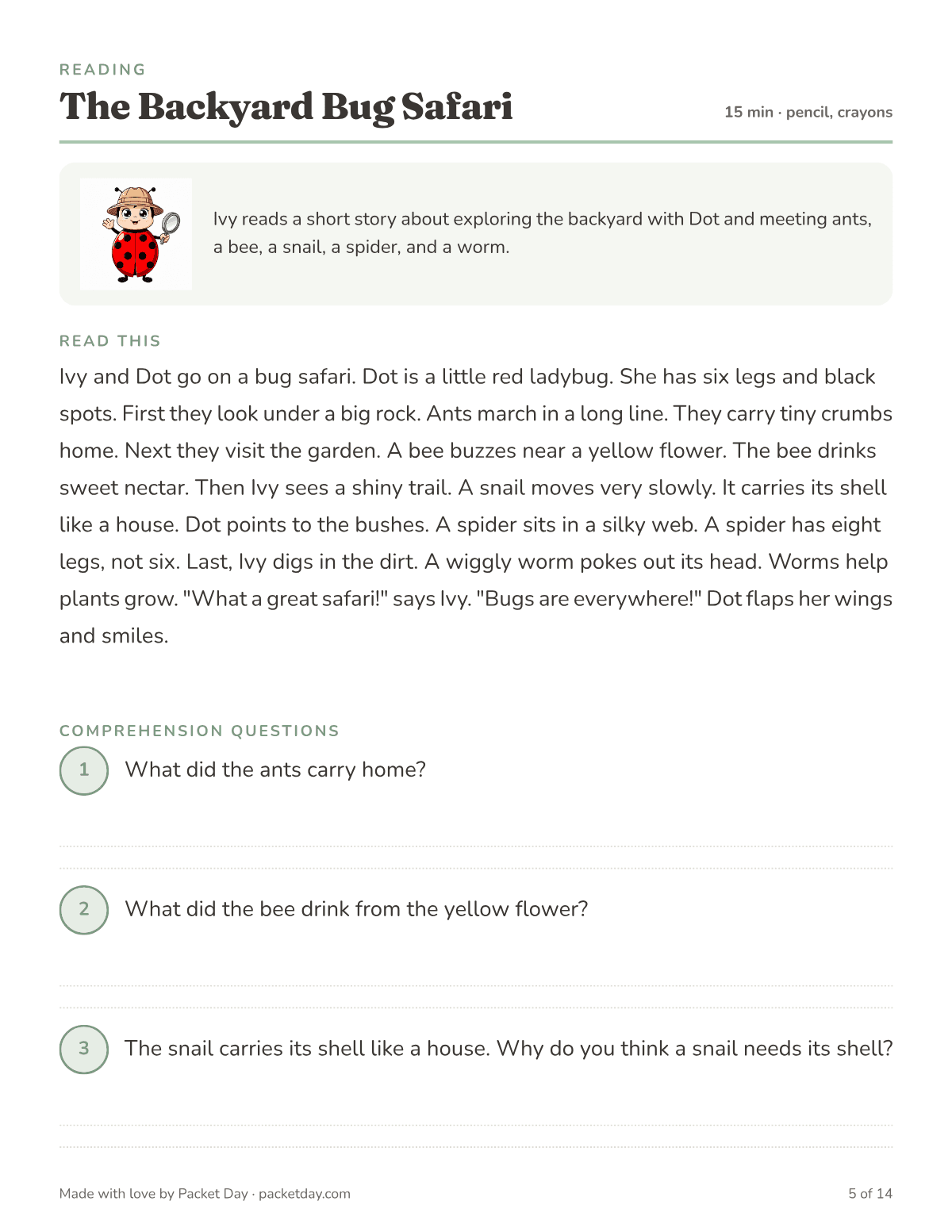
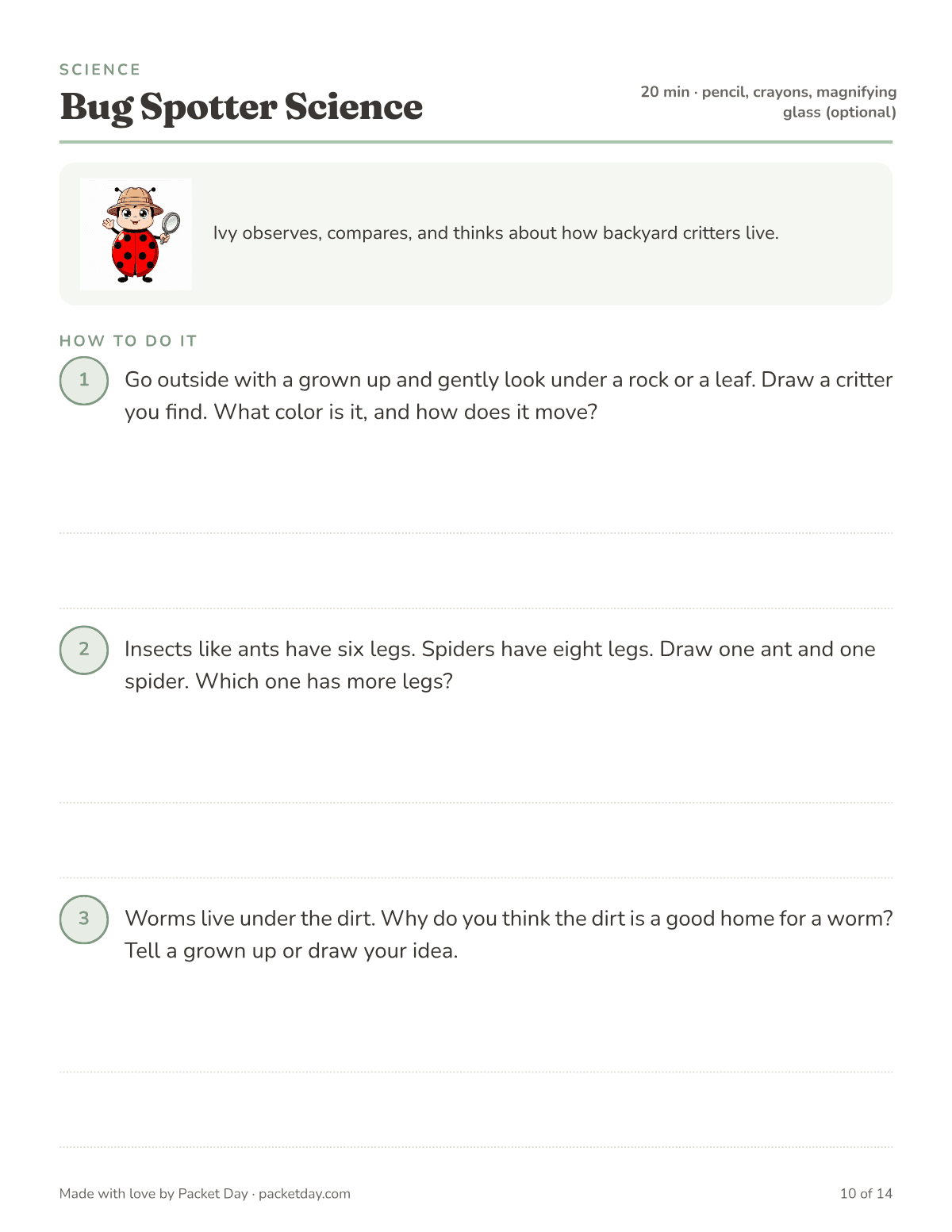
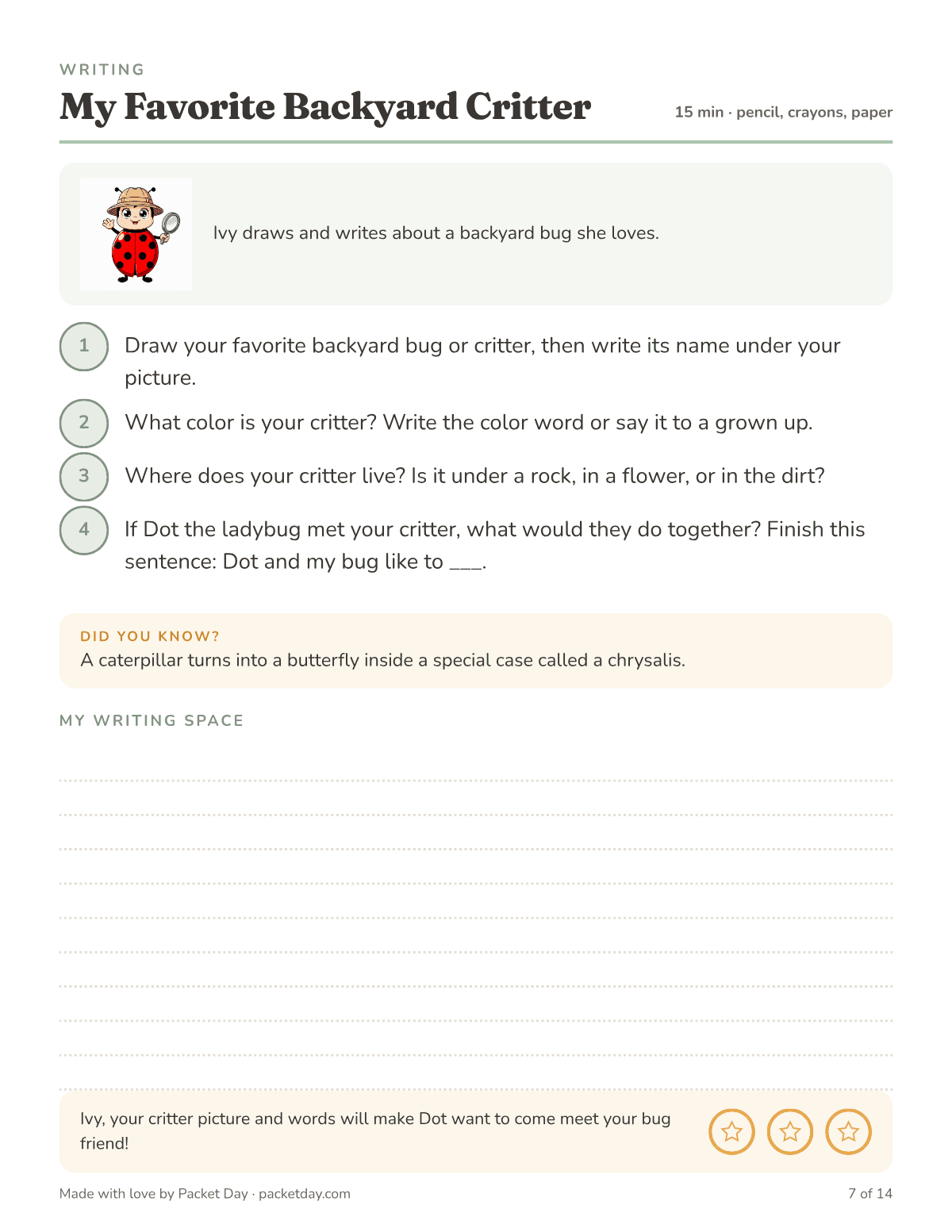
Free printable: Ivy's Backyard Bug Safari
14 pages, kindergarten, answer key included
Want one made for your kid instead? Make one free
What does my child actually do?
Math
Counting Critters with Dot
How many spots can you see when a leaf covers 3 of Dot's 7? Problems like that, then a big leaf to fill with ladybugs.
Reading
The Backyard Bug Safari
Ivy peeks under a rock, follows a shiny trail and digs up a worm. Then your kid decides why a snail needs its shell and draws a spider with all its legs.
Writing
My Favorite Backyard Critter
Draw a favorite critter, name it, say where it lives, and finish a sentence about what it would do with Dot.
Puzzle break
Dot's Crawly Critter Crossword
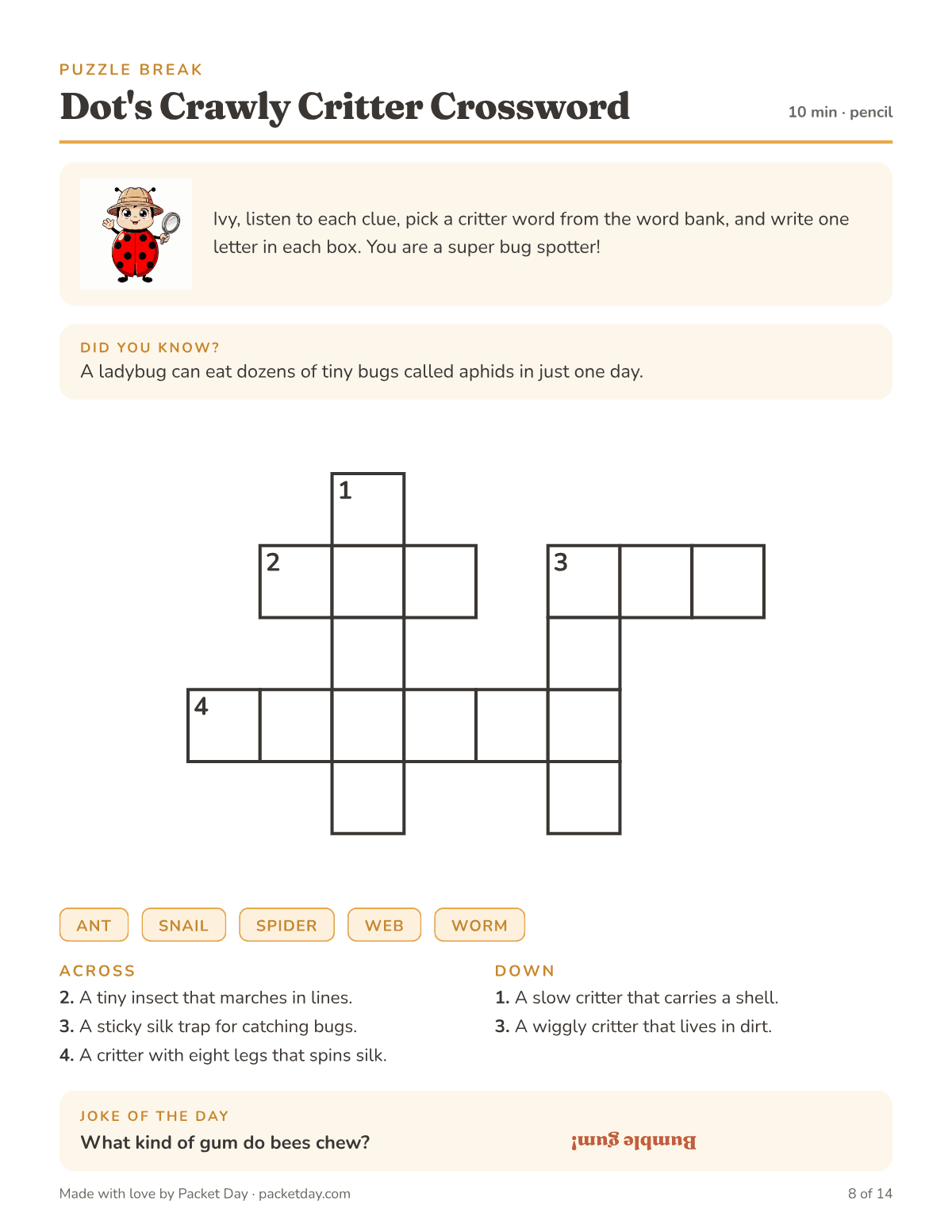
You read each clue, your kid picks from ant, snail, spider, web and worm, and one letter goes in each box.
Movement break
Dot's Bug Moves Dance
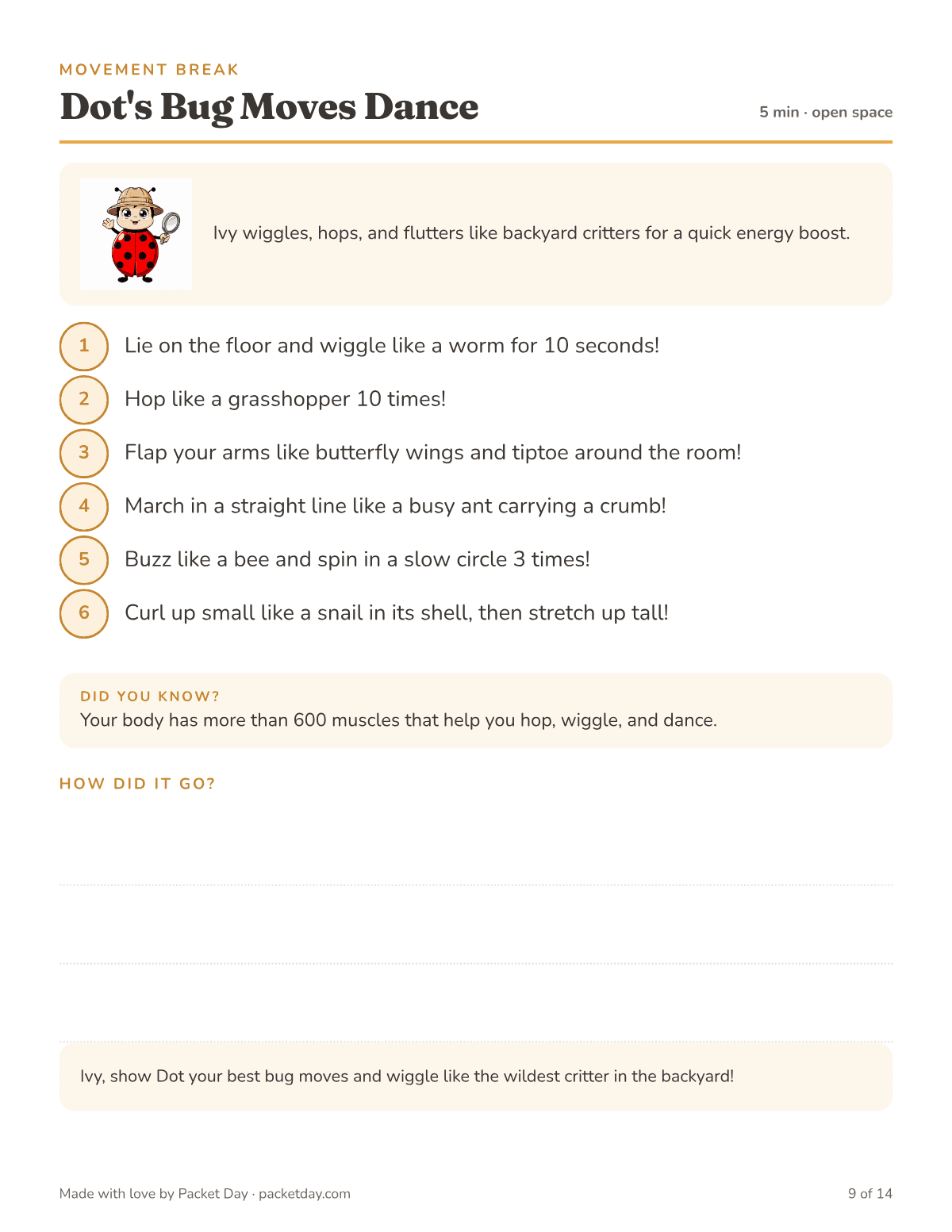
Six moves, from a floor wiggle and grasshopper hops to curling up small like a snail.
Science
Bug Spotter Science
Turn over a rock or a leaf and draw whoever lives there, compare an ant's legs with a spider's, then guess what a hungry caterpillar does next.

Meet Dot
Dot has six legs, a tan hat and a magnifying glass she never puts down. She's the kind of ladybug who asks "Are you ready to go?" and means right now.
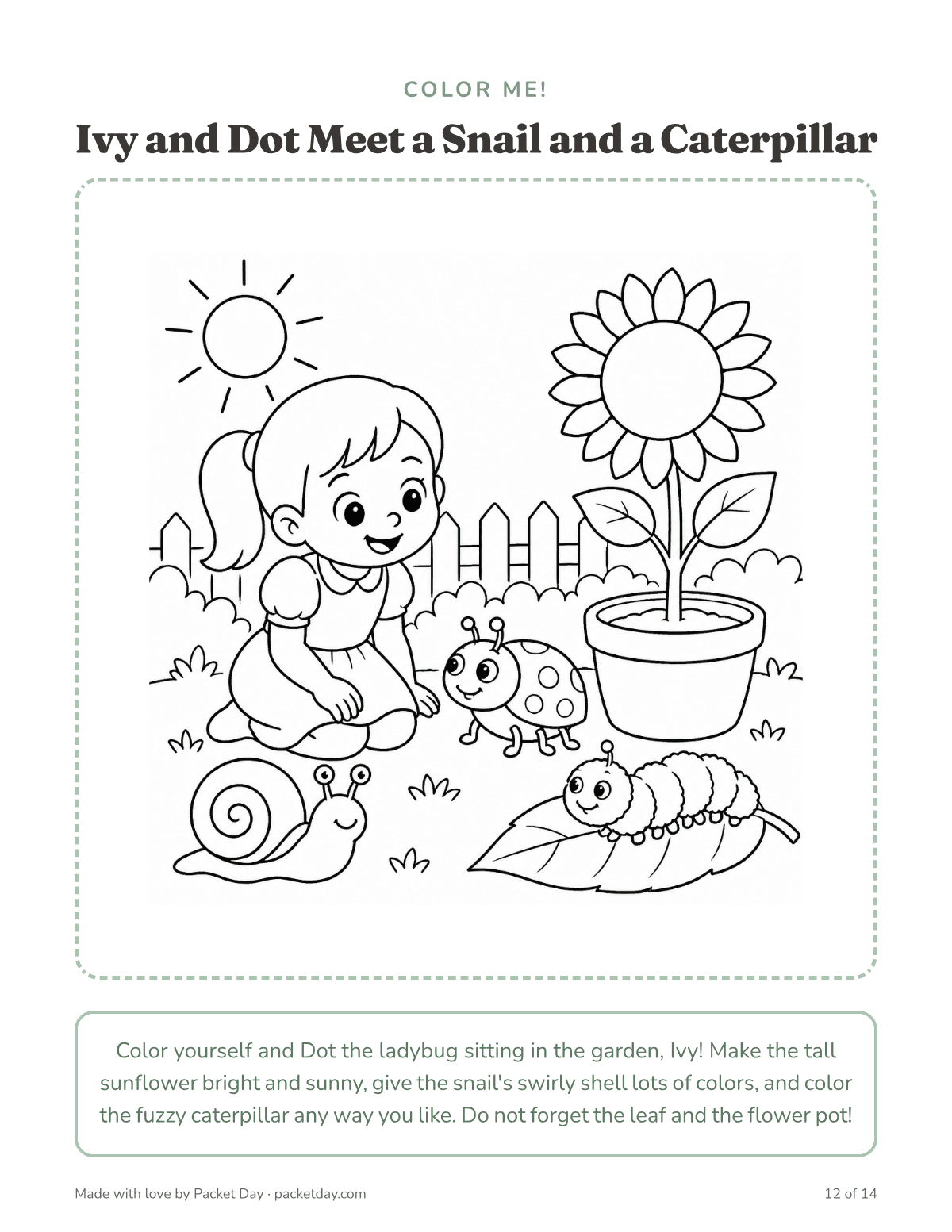
Look for her everywhere. A leaf covers some of her spots in a math problem, she points at the bushes when there's a spider to see, and she turns up by the flower pot on the coloring page. Her last line of the day is that she's flapping her wings for your kid.
Kindergartners tend to trust someone small. And since Dot is a real kind of bug, the fun doesn't end with the packet. Every ladybug in the yard is now a friend of hers.
What will my child learn?
Your child gets a full kindergarten day: simple sums and take aways up to 10, hearing a short story and talking about it, drawing and labeling, and looking closely at real living things.
The big idea is that not every bug is the same. Insects like ants have six legs. Spiders have eight. Snails carry their shells, and worms have no eyes at all, though they can feel light through their skin. Your kid draws an ant and a spider side by side, so the difference sticks.
The rest is the habit of noticing. Why do bees visit flowers? What will a hungry caterpillar do next? Why is dirt a good home for a worm? A five year old can answer by talking or drawing, and the parent note says that counts.
Which grades is this for?
Grades K-2
This sample is kindergarten, so we can be specific. Your kid can point to the words they know while you read. Numbers top out at 10, with counting or drawing welcome on every problem. Writing can be a picture and a word or two, and creative spelling is fine.
Grades 3-5
Older bug hunters get the same backyard theme with longer reading, real science vocabulary, math at their grade and more to write. Each one is built fresh for the grade you pick.
Grades 6-8
Middle schoolers can dig into bugs too, with longer passages, harder words, grade level math and longer written answers. Each packet is written from scratch for your kid's exact grade.
A note from Natalie
Nothing makes our kids happier than digging around in the backyard dirt looking for bugs. They check the back sidewalk and the deck for roly polies, and they follow lines of ants just to see where they end up.
Vivian loves finding tomato hornworms in our garden. When we go down to the river for science club, she's the one catching tadpoles.
That's who this packet is for. Dot sends your kid outside with a pencil, and the school part comes along for the ride. If you have a dirt kid, you already know how this day is going to go.
Questions parents ask about bug packets
Are spiders insects?
No. Spiders are arachnids, with eight legs, and insects have six. Kids still call all of them bugs, so the story does too, while the science section keeps the legs straight. Your child draws an ant next to a spider and works out which has more. The answer key has the numbers if anyone at your table disagrees.
What do ladybugs eat?
Most ladybugs eat tiny bugs called aphids, and one ladybug can eat dozens in a single day. That's why gardeners are so glad to see them. The crossword page has this fact in its Did You Know. If you have roses or a vegetable bed, turn over a few leaves with your kid and see who's home.
Why do bees visit flowers?
For food. Bees drink nectar and gather pollen for themselves and their young, and they help pollinate plants as they move from flower to flower. The science section asks your kindergartner to guess why bees visit flowers before you tell them. Let them answer out loud or draw it. The answer key has a simple version for you.
Is a backyard bug hunt safe for a kindergartner?
With you beside them, yes. The science section tells kids to look gently, and the parent note asks you to remind your kid not to touch bees or spiders. Looking under a rock or a leaf is the whole job. A nervous kid can just watch and draw from a comfortable distance.
What if we don't have a backyard, or it's cold outside?
Any patch of outdoors works: a park, a planter or a crack in the sidewalk. Only the first science step needs you outside, and the rest of the packet happens at the table. On a freezing day, skip the rock and have your kid draw a critter they remember finding. The magnifying glass is optional either way.
Are these made by AI, and are they any good?
Yes. AI writes each packet fresh for your kid's grade and whatever theme you choose. We homeschool too, our kids try these out, and we fact check every sample we put on this site. They aren't perfect, so read through the story before you hand it over. The answer key handles most of the checking.
Packets for the days you need one
Screen-free days
Off the tablet and into a story they actually want to finish.
See how it works →Fun Fridays
Friday packet day, the tradition that started Packet Day.
See how it works →Browse every unit study packetSee a full sample packet
Tired of hunting down free worksheets? See the difference.
Keep the learning going
More unit study packets
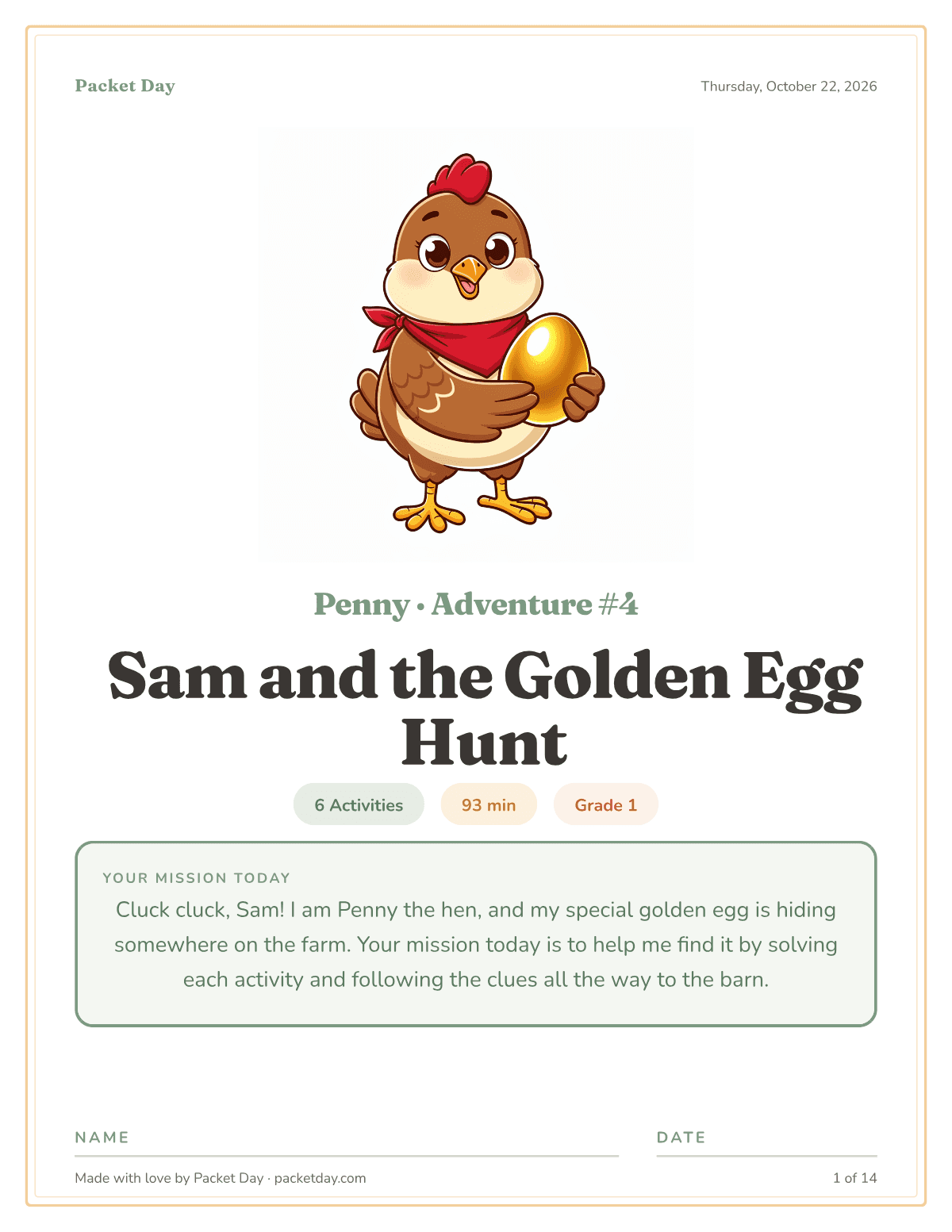 Farm Animals unit studyA printable farm animal unit study on baby animal names, wool, hay and what animals need, shown as a grade 1 sample with a golden egg hunt. Free to start.
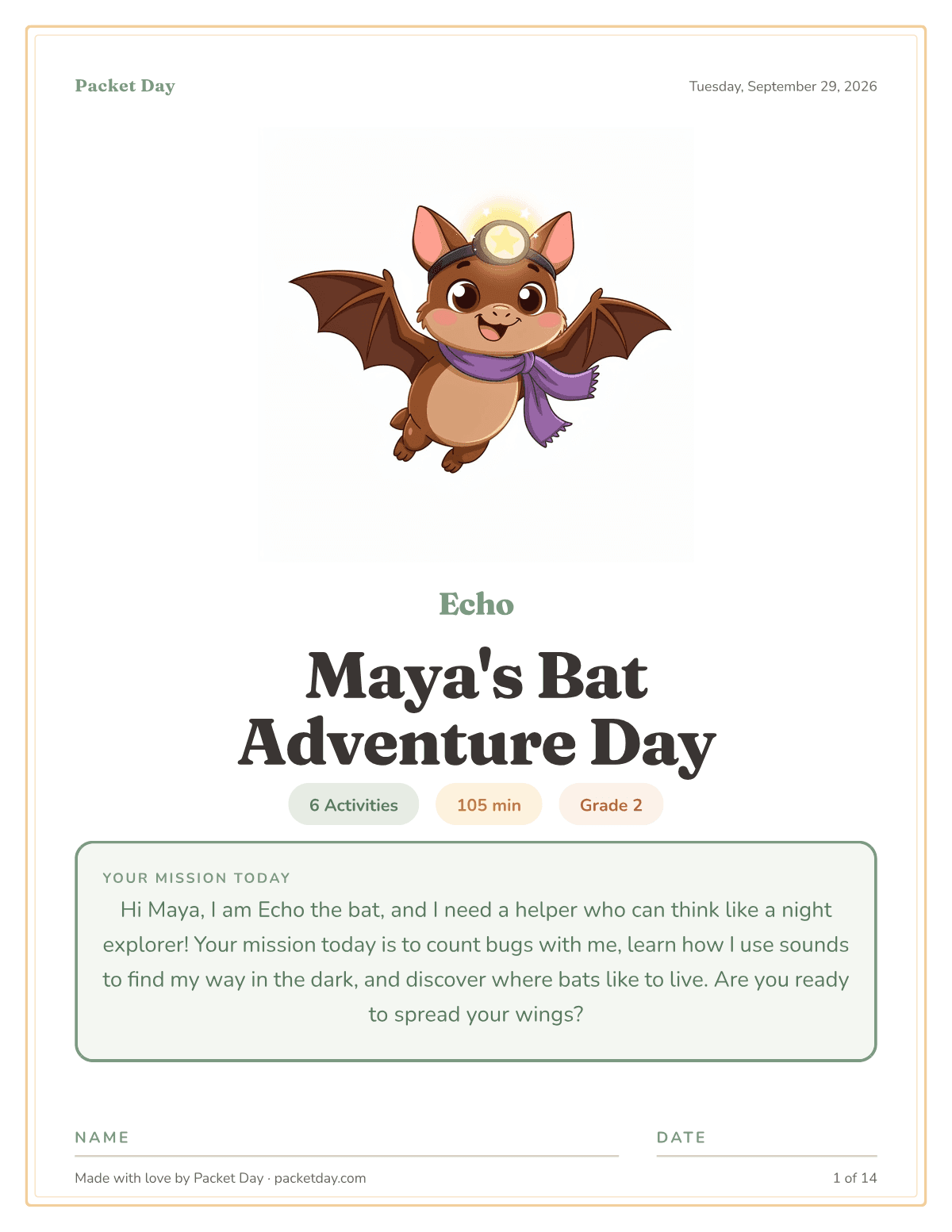 Bats unit studyA printable bats unit study with a bug counting math page, a short echolocation story, a maze and a clap test you can try at home. Free to start.
 Pumpkins unit studyA printable pumpkin unit study that follows one pumpkin from seed to jack-o-lantern, with a float test, skip counting and a shape sudoku. Free to start.
Packets and guides that fit
- Kindergarten Homeschool GuideWhat kindergartners typically learn, how to tell if your child is ready, easy play based activities for home and a real kindergarten sample packet.
- 25 Screen-Free Activities That Actually Work25 screen-free activities for kids that actually hold their attention: quiet, creative, and active ideas for sick days, road trips, rainy days.
Ready for your own bug day?
Packet Day makes print ready, themed learning packets for kids in K to 8, built around whatever your kid is obsessed with.
Make your own bug packet freeFree is 1 packet a month, no card needed. Unlimited is $9 a month billed annually ($108 a year) or $12 month to month.