
Nutcracker Unit Study Packet for Kids
A Nutcracker unit study packet is a printable school day about Tchaikovsky's holiday ballet, from toy soldiers to the Land of Sweets, for kids in K to 8. This grade 2 sample has 14 pages plus a parent answer key: math, reading, writing, a word search, movement, science, coloring and a certificate. About 108 minutes of activities. Free to start.
By Natalie, homeschool mom and Packet Day co-founder
Updated October 2026Reviewed by Natalie
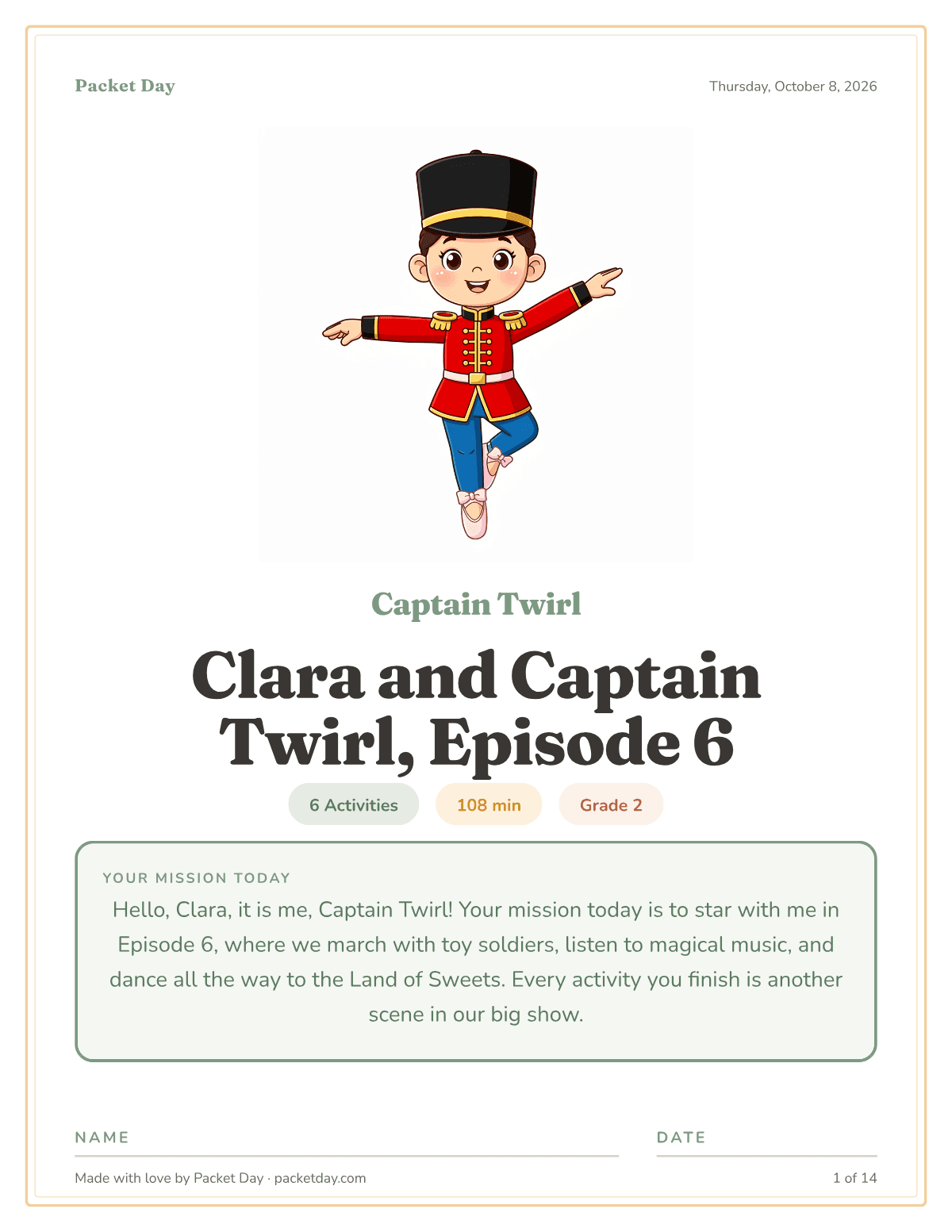
A sample packet made for a grade 2 learner named Clara
What is inside a Nutcracker packet?
A Nutcracker packet is a full school day on paper: 11 to 17 pages built around The Nutcracker, roughly 2 to 5 hours with breaks. This sample has 14 pages plus a parent answer key, and Captain Twirl guides the whole day.
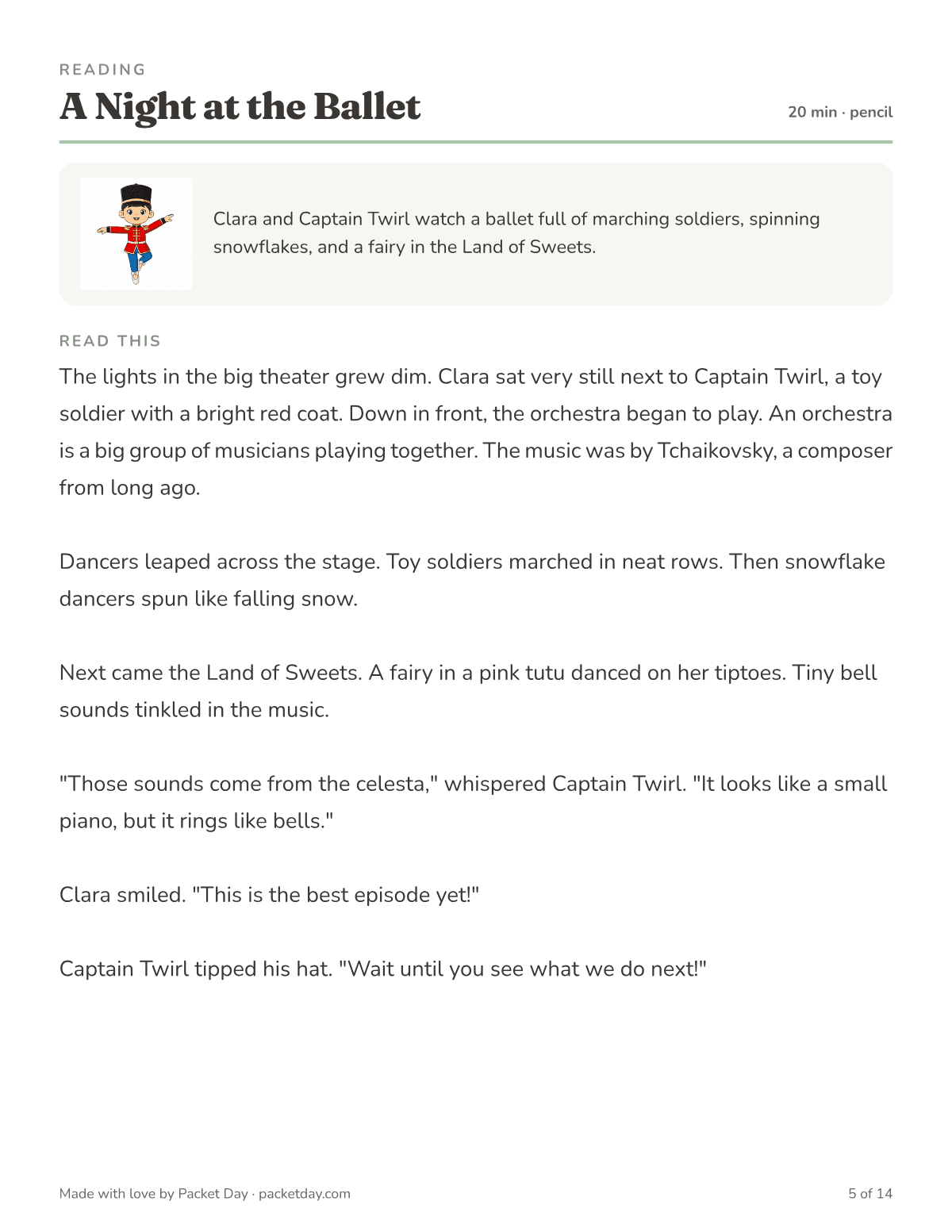
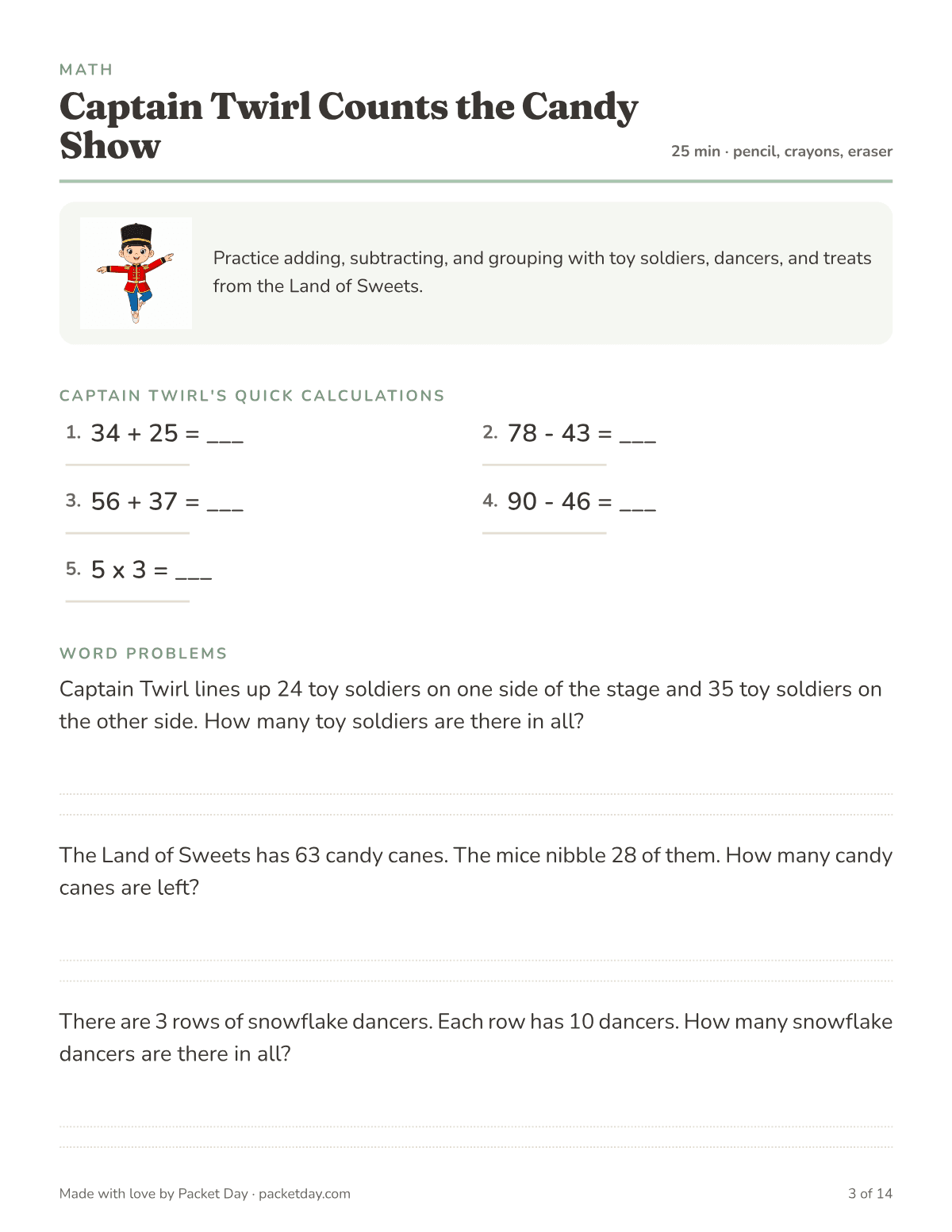
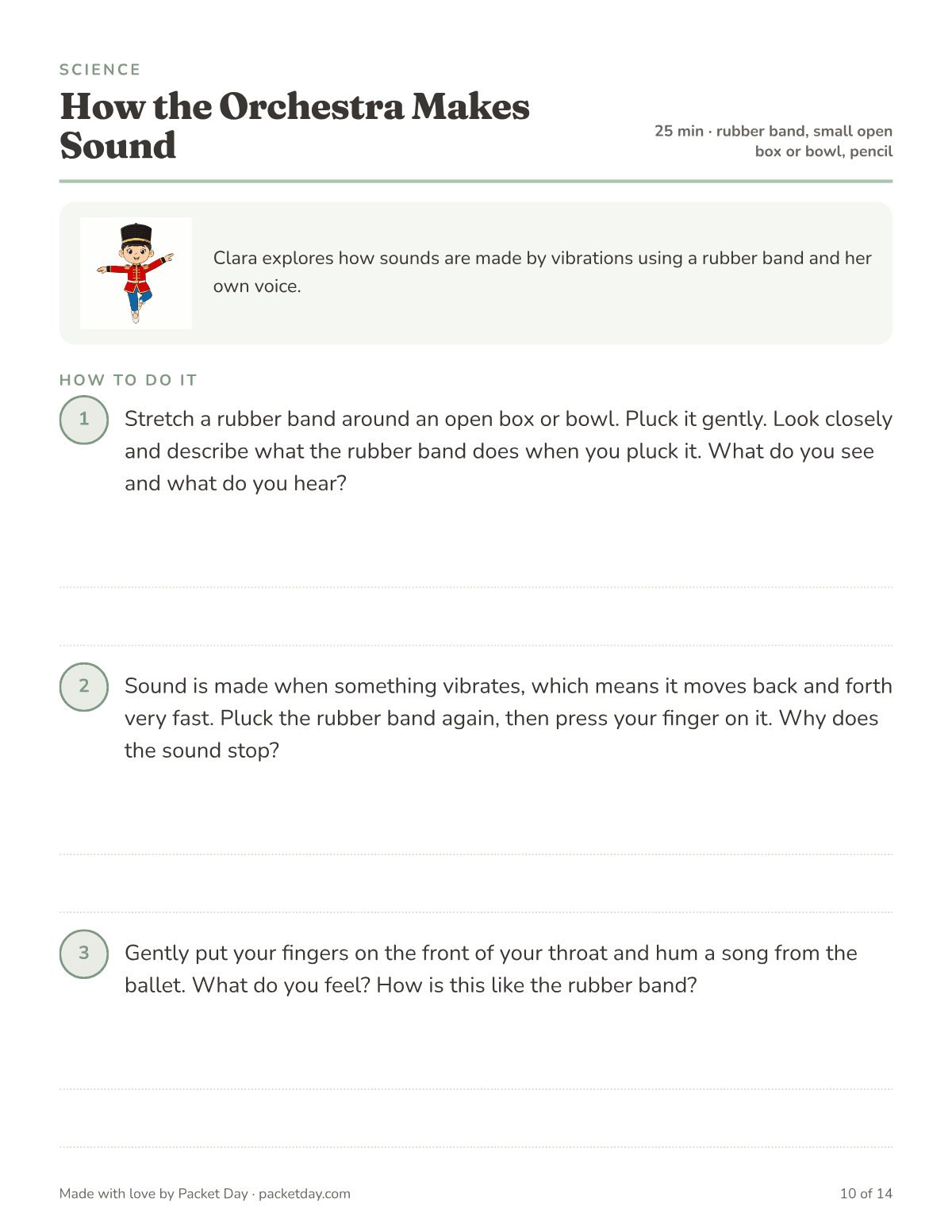
Free printable: Clara and Captain Twirl
14 pages, grade 2, answer key included
Want one made for your kid instead? Make one free
What does my child actually do?
Math
Captain Twirl Counts the Candy Show
Two digit adding and subtracting within 100, equal groups of 5 and 10, then drawing 4 plates with 5 gumdrops each.
Reading
A Night at the Ballet
A story about watching The Nutcracker with the orchestra playing down in front, then five questions about soldiers, snowflakes and what an orchestra is.
Writing
My Trip to the Land of Sweets
Four or five sentences about a sleigh ride to the Land of Sweets, full of color words, taste words and music.
Puzzle break
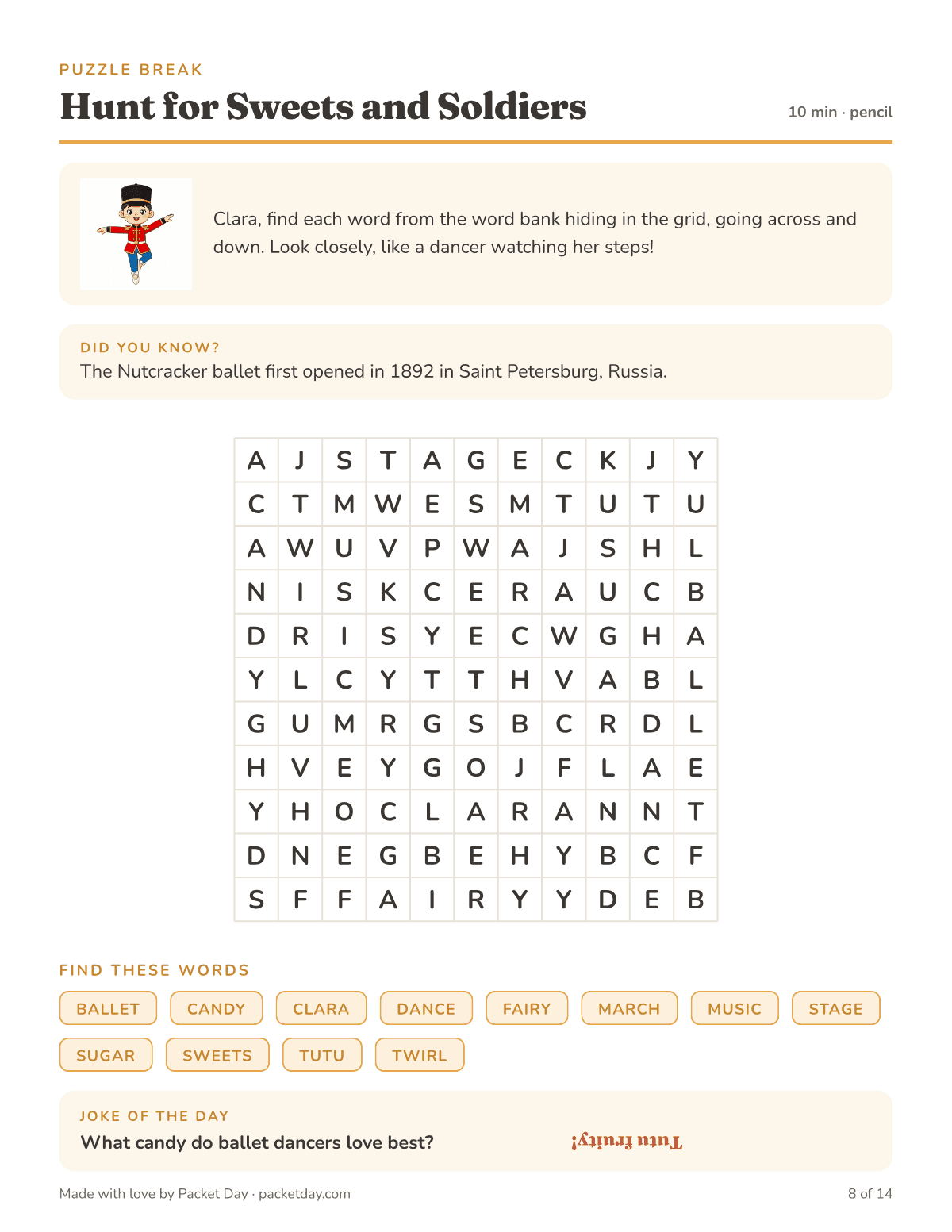
Hunt for Sweets and Soldiers
Twelve ballet and candy words hidden across and down, plus a joke about the candy dancers love best.
Movement break
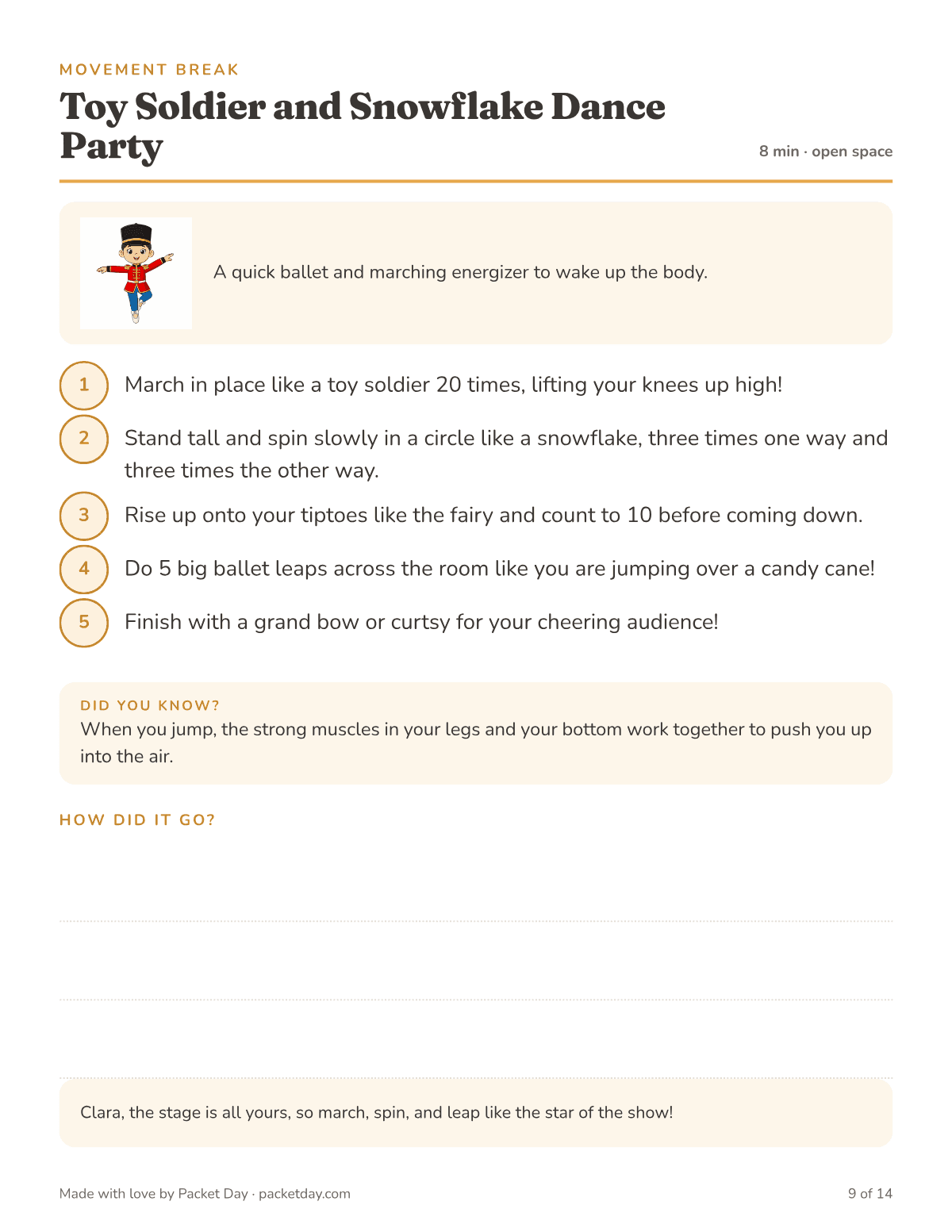
Toy Soldier and Snowflake Dance Party
High knee soldier marching, snowflake spins, a tiptoe balance, ballet leaps and a grand bow.
Science
How the Orchestra Makes Sound
Plucking a rubber band, feeling your throat hum, comparing tight and loose bands, and predicting whether a tuba or a flute plays lower.
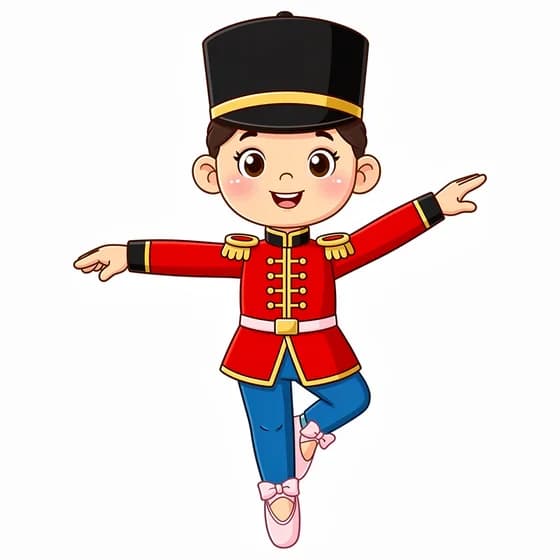
Meet Captain Twirl
Captain Twirl is a toy soldier with a red coat, a tall black hat and, surprisingly, pink ballet slippers. He is half soldier and half dancer, which makes him exactly right for The Nutcracker.
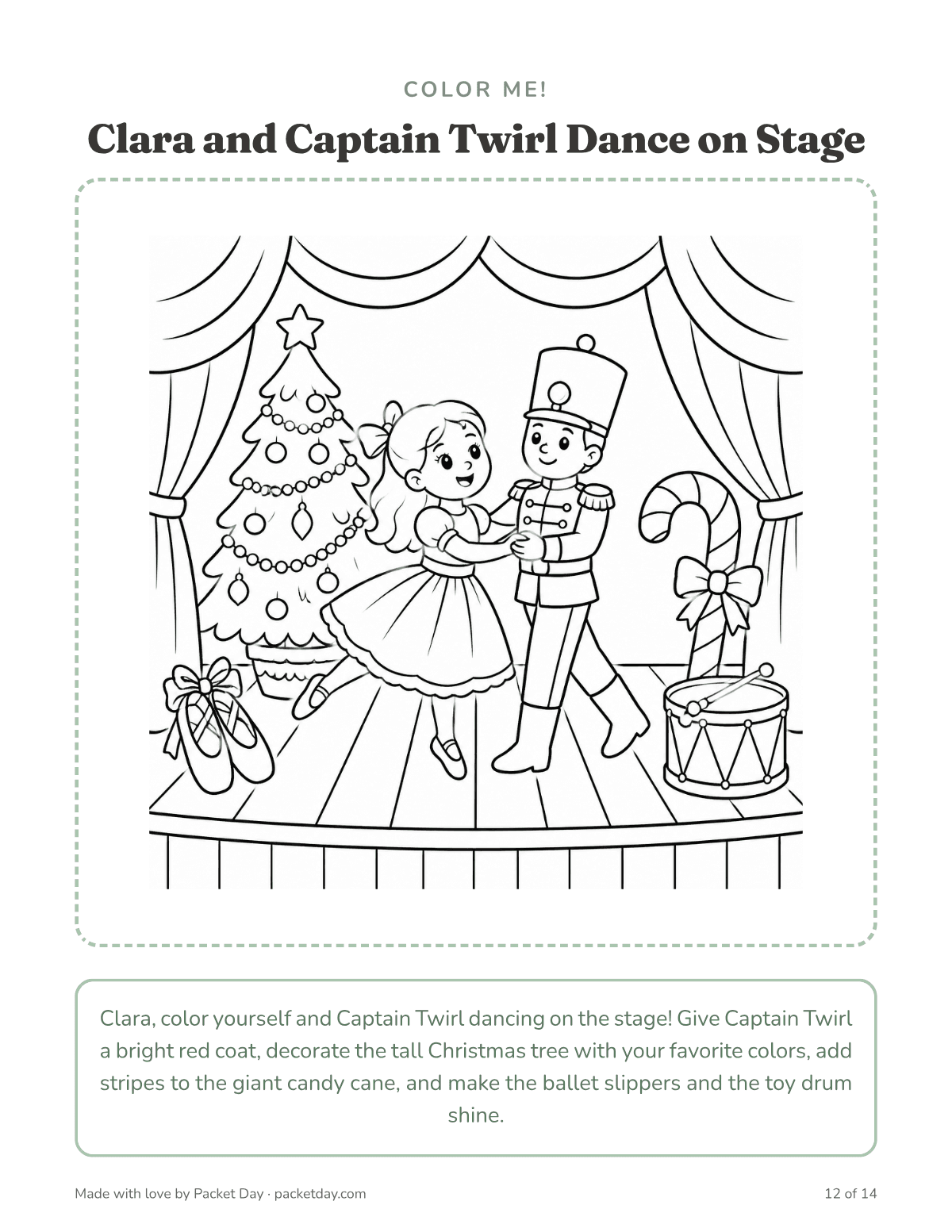
He sits beside Clara in the dim theater, explains that the tinkling bells come from a celesta, lines up toy soldiers in the math and dances with her on the coloring page. Every activity is another scene in their big show.
For a kid who loves dance or music, that framing does a lot of work. Finishing the math is not a chore. It is how you get to the next scene.
What will my child learn?
Your child gets a full grade 2 day: two digit adding and subtracting within 100, early multiplication as equal groups, reading a story for details, writing four or five descriptive sentences, and a hands on sound experiment.
The ballet facts are real. The Nutcracker has music by Tchaikovsky and first opened in 1892 in Saint Petersburg, Russia. It is based on an older story by the German author E. T. A. Hoffmann. The Dance of the Sugar Plum Fairy uses a celesta, an instrument that looks like a small piano but has little hammers that strike metal bars, so it rings like bells.
The science is all about vibration. Clara plucks a rubber band, watches it blur, stops the sound with a finger, compares a tight band with a loose one, and figures out why a big tuba plays lower than a small flute.
Which grades is this for?
Grades K-2
This sample is grade 2, so we can be specific. The story is about 135 words. The math covers two digit adding and subtracting within 100, plus groups of 5 and 10. Writing asks for four or five sentences with color, taste and sound words.
Grades 3-5
Upper elementary kids get the same Nutcracker theme with longer reading, harder vocabulary, math at their grade and more writing. Every packet is built new for the grade you pick.
Grades 6-8
Middle schoolers get The Nutcracker too, with longer passages, tougher words, math at their level and longer written answers. Each one is written from scratch for your kid's exact grade.
A note from Natalie
A few years back, Vivian started a nutcracker collection. She now has a handful of them in all different sizes and styles, and every holiday season she sets them out and shows them off with real pride.
Captain Twirl, ballet slippers and all, would fit right in on her shelf.
If you have a kid who loves the music, the dancing or just the toy soldiers lined up on the mantel, this is an easy December day. Put the Dance of the Sugar Plum Fairy on in the background while they color, and let the packet do the rest.
Questions parents ask about Nutcracker packets
What instrument sounds like bells in The Nutcracker?
It is the celesta. It looks like a small piano, but when you press a key, a little hammer strikes a metal bar, so it rings like bells. Tchaikovsky used it for the Dance of the Sugar Plum Fairy. The story names it, and the Did You Know after the reading questions explains how it works.
Does my kid need to have seen The Nutcracker?
No. The reading story walks through a performance from the dimming lights to the Land of Sweets, so a kid who has never seen it still follows along. If you can, play the March or the Dance of the Sugar Plum Fairy during writing or coloring time. The parent note suggests exactly that, and it ties the day together.
Where does The Nutcracker story come from?
The ballet is based on an older story by the German author E. T. A. Hoffmann, The Nutcracker and the Mouse King. Tchaikovsky wrote the music, and the ballet first opened in December 1892 in Saint Petersburg, Russia. The packet's Did You Know boxes cover the author and the premiere, a nice bit of history for a second grader.
What supplies does the science activity need?
Just a rubber band, a small open box or bowl and a pencil. Your kid stretches the band around the box, plucks it, stops it with a finger, then tries it tighter and looser to hear high and low sounds. Humming with fingers on the throat adds the last piece: voices vibrate too.
Is the math really grade 2 math?
Yes. It sticks to the grade 2 range: two digit adding and subtracting within 100, like 56 + 37 and 90 minus 46, with regrouping in several problems. It also starts multiplication the gentle way, as equal groups: 3 rows of 10 dancers and 4 plates of 5 gumdrops. The answer key shows every answer.
Are these made by AI, and are they any good?
Yes. AI writes each packet fresh for your kid's grade and the theme you type in. We are homeschool parents, we try packets with our own kids, and we fact check every sample on this site before it goes up. They are good and not perfect, so read the story first. The answer key takes care of checking.
Packets for the days you need one
Screen-free days
Off the tablet and into a story they actually want to finish.
See how it works →Fun Fridays
Friday packet day, the tradition that started Packet Day.
See how it works →Browse every unit study packetSee a full sample packet
Tired of hunting down free worksheets? See the difference.
Keep the learning going
More unit study packets
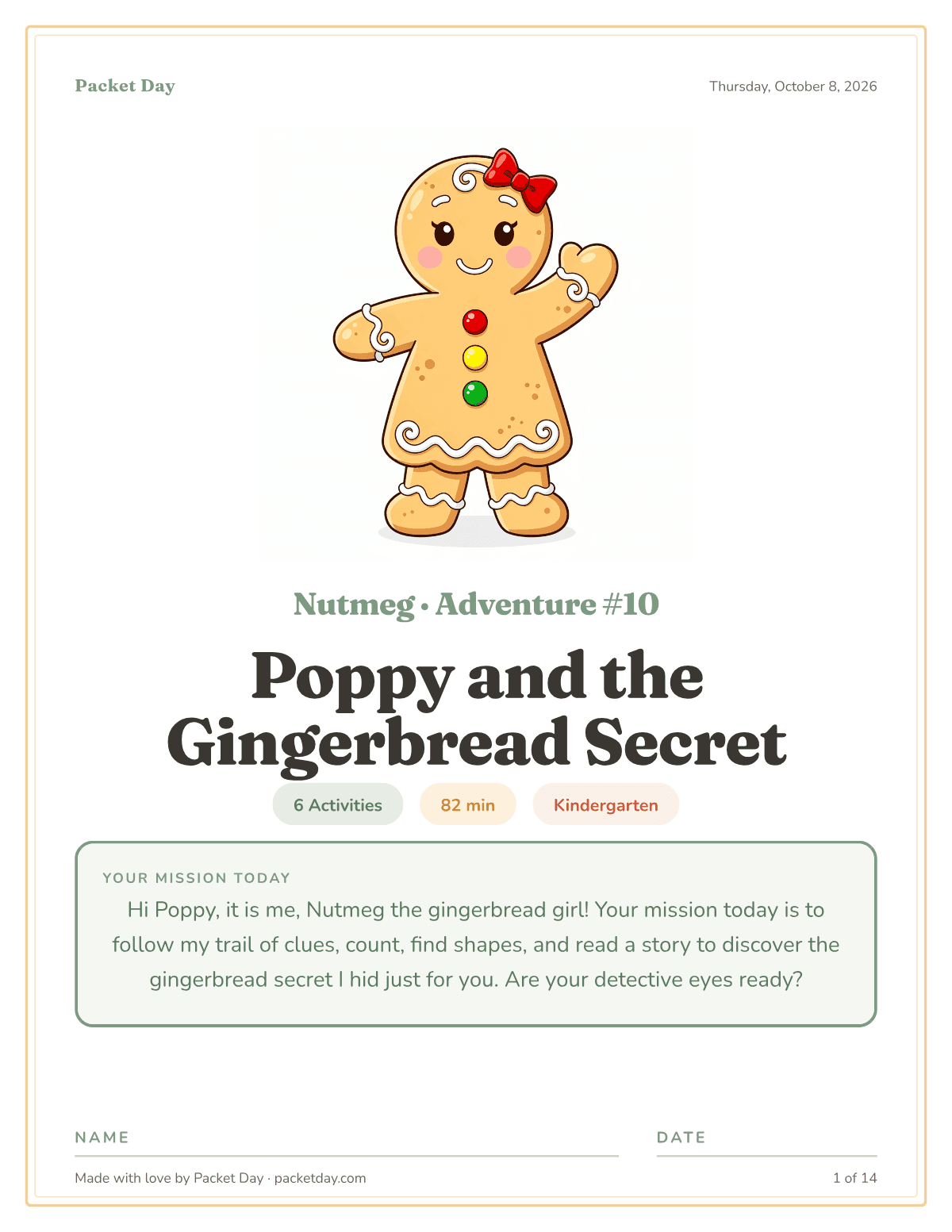 Gingerbread unit studyA printable gingerbread unit study for December: a crumb trail mystery, shapes, counting to 10 and dough science, in a kindergarten sample. Free to start.
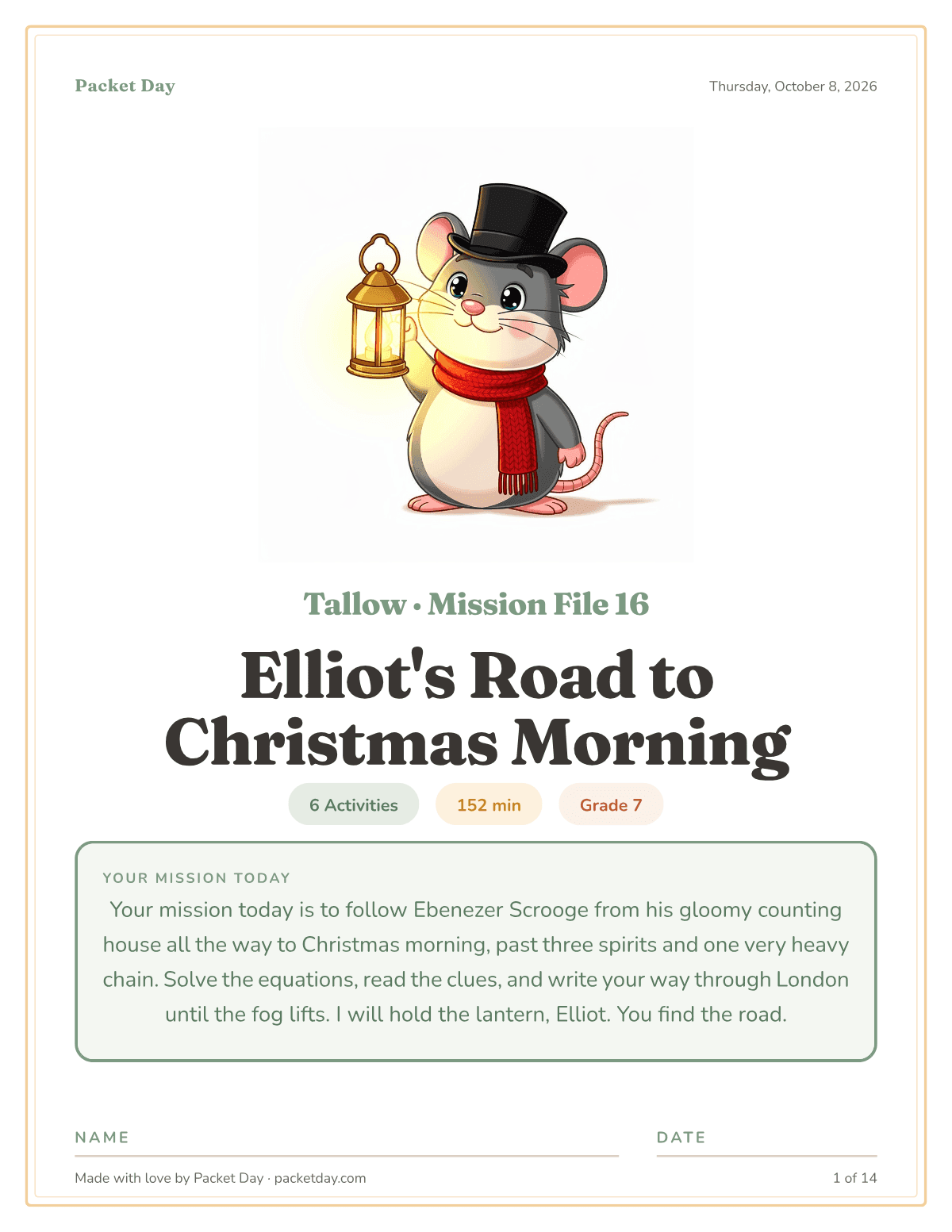 A Christmas Carol unit studyA printable A Christmas Carol unit study for December: Scrooge, the three spirits and London's coal smoke fogs, shown as a grade 7 sample. Free to start.
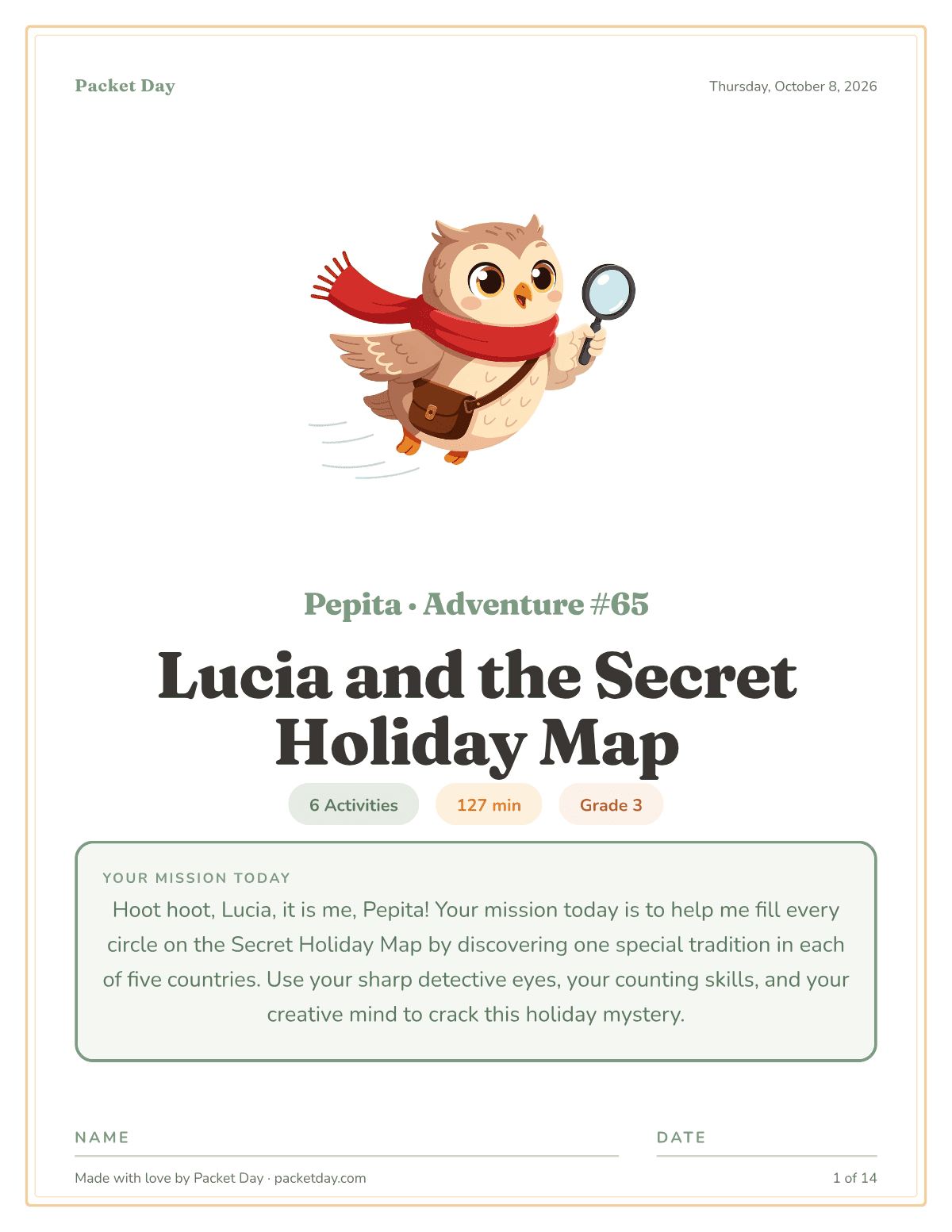 Christmas around the world unit studyA printable Christmas around the world unit study for December: Las Posadas, St. Lucia Day and why Australia has a summer Christmas. Free to start.
From the Packet Day blog
- 25 Screen-Free Activities That Actually Work25 screen-free activities for kids that actually hold their attention: quiet, creative, and active ideas for sick days, road trips, rainy days.
- How to Keep Learning Going on a "Bad Day"Bad days happen: sick kids, rough mornings, derailed plans. Here's how to keep a thread of learning alive without forcing a full school day.
Ready for your own Nutcracker day?
Packet Day makes print ready, themed learning packets for kids in K to 8, built around whatever your kid is obsessed with.
Make your own Nutcracker packet freeFree is 1 packet a month, no card needed. Unlimited is $9 a month billed annually ($108 a year) or $12 month to month.